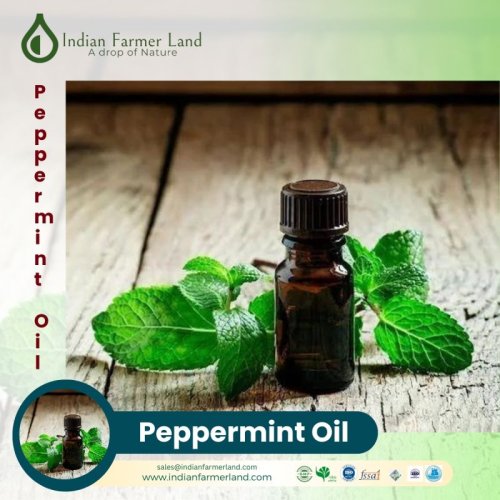
| Business Type | Manufacturer, Exporter, Supplier |
| Form | Liquid |
| Type | Essential Oil |
| Color | Clear To Pale Yellow |
| Packaging Type | Airtight Container |
| Application | Flavoring In Foods And Beverages,Added In Soaps,Cosmetics,And Perfumes,Aromatherapy,Alleviates Nausea,Calming Relief For Sore Muscles,Relieves Headaches,Natural Energizer,Used In Hair Products,Helps Reduce Fever,Soothes Burnt Skin,Freshens Breath,Aids I |
| Country of Origin | India |
| Material | Peppermint Plant (Mentha Piperita) |
| Extraction Method | Steam Distillation Using Alcohol |
| Main Components | Menthol,Menthone,1,8-Cineole,Limonene,β-Pinene,β-Caryophyllene |
| Storage Conditions | Protect From Light |
Description-
Peppermint oil is derived from peppermint plant, scientifically known as Mentha piperita, originated in Europe & North America and also well grown in Italy, U.S.A, Japan and Britain. It grows up to 1 meter and has slightly hairy leaves with pinkish flowers. Peppermint plant (Mentha piperita) is hybrid of watermint (M. aquatica) and spearmint (M. spicata).
Extraction-
Peppermint oil is extracted from dried or fresh leaves and flowering plant by steam distillation using alcohol.
Composition-
Its major composition is Menthol and Menthone and other constituents are 1, 8- Cineole, Limonene, β-Pinene and β-Caryophyllene.
Properties-
Peppermint oil appears clear to pale yellow in color. It is fresh and sharp in odor and slightly pungent in taste. It is watery in viscosity. Peppermint oil is analgesic, anesthetic, expectorant
Blending-
Peppermint oil is nicely blends with benzoin, eucalyptus, lavender, marjoram, lemon and rosemary.
Uses-
- It is used as flavoring in foods and beverages such as baked goods, desserts & candy canes, mint & peppermint patties and liquors or energy drinks.
- It is used to fragrance soap and cosmetics.
- It is used in aromatherapy because of its cooling and refreshing effect so it stimulate mind.
- It helps in alleviate nausea, vomiting, morning sickness.
- It gives cooling sensation and a calming effect on body as it relieves in sore muscles.
- It reduces stomach aches, headache and also provide ease in sinus, chest congestion, spastic colon, migraine.
- It is used as natural energizer as it improves mental focus and concentration. It is used in formulation of shampoo and conditioners as it stimulate scalp.
- It is used in fever as it helps in reduce fever due to its cooling effect.
- It is used to hydrate burnt skin and relief from sunburn pain.
- It provides freshens bad breath and reduces cavities.
- It is used to prevent prostate cancer.
- It boosts digestion and expelling gases.
- It is used as muscle relaxant.
Safety and Precaution-
- It can cause Gall bladder inflammation.
- It can interfere with sleep.
- Overdose can cause skin rashes, slower rapid breathing, abdominal pain & diarrhea, urinary problems, convulsions, depression and unconsciousness.
- It may raise risk of low blood sugar or hypoglycemia.
- Avoid undiluted use as it can be toxic.
- It can decreases milk production while breast feeding or pregnancy.
- Peppermint oil is non toxic but cause sensitization due to its menthol content.
Specification of Mentha piperita oil:
Testing Protocol – BP
Botanical Source – Mentha piperita
Appearance – A colourless pale yellow or pale greenish yellow liquid. It has characteristic odour and taste followed by sensation of cold.
Solubility – Miscible with alcohol and methylene chloride.
Identification A. – Examine the chromatograms obtained in the test for
Mint oil. – Examine the chromatograms obtained in the test for Chromatographic profile.
Relative Density – 0.900 – 0.916
Optical Rotation – -10° – -30°
Refractive Index – 1.457 – 1.467
Acid Value – Max. 1.4
Fatty oils % & resinified
Chromatographic Profile:
Limonene – 1.0% – 5.0%
Cineol – 3.5% – 14%
Menthone – 14% – 32%
Menthafuran – 1.0% – 9.0%
Isomenthone – 1.5% – 8.0%
Menthyl Acetate – 2.8% – 10%
Isopulegol – max. 0.2%
Menthol – 30% – 55%
Pulegone – max. 4.0%
Carvone – max. 0.2%
Ratio of cineol/Limonene – NLT 2.0%
Storage – In a well fitted, airtight container, protected from light, at a temperature not exceeding 25°C.
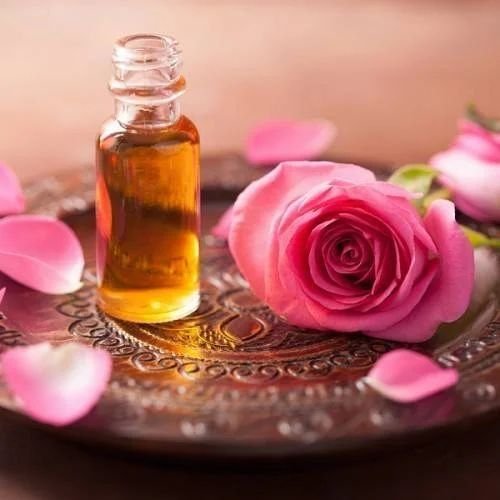
| Business Type | Manufacturer, Exporter, Supplier |
| Form | Liquid |
| Packaging Type | Glass Bottles |
| Country of Origin | India |
| Scientific Name | Rosa Damascene |
| Color | Pale Yellow |
| Consistency | Thin |
| Aroma | Floral And Sweet |
| Blends Well With | Geranium,Jasmine,Clove,Palmarosa |
| Main Components | Citronellol,Citral,Carvone,Eugenol,Farnesol |
| Application | Perfumery,Aromatherapy,Skincare,Anti-inflammatory,Relieve Spasms |
| Safety Precautions | Avoid Excessive Concentration,Avoid During Pregnancy |
| Material | Rose Petals |
| Type | Essential Oil |
Description:
Rose is scientifically known as Rosa damascene belongs to Rosaceae family. A rose is a perennial flowering plant, flowers vary in size and shape and usually large and showy, in colours ranging from white through yellow and reds. It is native to Asian countries such as Syria, Bulgaria, Turkey, India, Pakistan, Iran and China), Europe, North America and Northwestern Africa.
Extraction:
Rose oil is extracted from fresh petals of Rosa damascena or various type of rose through steam distillation.
Composition:
Rose oil is mainly constitutes of citronellol, citral, carvone, citronellyl acetate, eugenol, ethanol, farnesol, stearpoten, methyl eugenol, neroli, nonanol, nonanal, phenyl acetaldehyde, phenylmenthyl acetate and phenyl geraniol
Properties:
Rose oil is transparent pale yellow mobile liquid; rose essential oil is called Rose Otto. Rose Otto is light yellow in color, thin in consistency and its aroma is strongly floral and sweet. Rose Otto can solidify at cool temperature. Rose oil is beautiful and intoxicating oil.
Blending:
Rose oil is nicely mixes with geranium, jasmine, clove and palmarosa essential oils.
Uses:
- Rose oil is used in preparation of high grade perfumery and cosmetics products.
- It is used in aromatherapy as it works as healing tonic and mood elevating supplement by soothing nerves and calms nervous system.
- It acts as a tonic for the female reproductive system and stimulate libido and increase feeling of sexual desire.
- It is used in treatments for skincare to help prevent and fight bacteria associated with conditions such as a acne ad treat pimples and blemishes by reducing length and severity of flare-ups.
- It acts as anti-anxiety, it helps men with sexual dysfunction, balance sex hormones and increases sex drive.
- It has anti inflammatory, reduce
- It provide cooling and soothing property as it is effective against dry, hot, inflamed or itchy skin and many other inflammatory issues like conjunctivitis.
- It provides relieve from spasms as it prevents convulsions, muscle pulls, menstrual cramps and spasmodic cholera. .
- It has anti inflammatory property, as it reduces rheumatism, arthritis, gout and fever.
- It provide strength to gums and hair roots while toning and lifting skin and contracting muscles, intestines and blood vessels
- It is effective against typhoid, diarrhea, cholera, food poisoning and other bacterial diseases and infections on skin, ears, eyes and wounds.
- It encourages health of liver and treats issues like excess flow of bile, acids and ulcers
Safety and Precautions:
- Avoid use in excessive concentration due to its strong aroma it can increase headache.
- Do not use rose oil during pregnancy as it could cause a miscarriage if taken in excess.
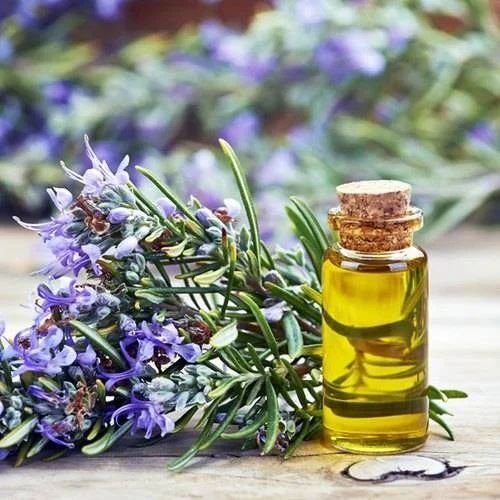
| Business Type | Manufacturer, Exporter, Supplier |
| Verberone | Max. 0.4% |
| Borneol | 1.5% – 5.0% |
| Alpha – terpineol | 1.0% – 2.6% |
| Acid Value | 1.0 |
| Odor | Characteristic |
| Usage | cosmetic medical |
| Description | Clear mobile, colorless to pale yellow liquid. |
| Specific Gravity | 0.895 – 0.920 |
| Specific Rotation | -5° – +24° |
| Refractive Index at 20°C | 1.464 – 1.473 |
| Alpha-pinene | 9% – 14% |
| Camphene | 2.5% – 6.0% |
| Beta-pinene | 4.0% – 9.0% |
| Beta-myrcene | 1.0% – 2.0% |
| Limonene | 1.5% – 4.0% |
| Cineole | 38% – 55% |
| P-Cymene | 0.8% – 2.5% |
| Camphor | 5.0% – 15% |
| Storage | In well fitted container in cool and dark place. |
Description-
Rosemary is a herb used for aromatherapy as well as for culinary purpose, is known as Rosmarinus officinalis belongs to Lamaeceae family. Rosemary is evergreen plant which has grayish green, needle shaped leaves with slightly blue colour small flower. Rosemary plant is native to Mediterranean region, Asia and also cultivated in France, Tunisia and Yugoslavia.
Extraction-
Rosemary oil is obtained from the flowering tips of Rosmarinus officinalis herb through steam distillation method.
Composition-
Its constituents are α-pinene, β-pinene, borneol, camphor, bornyl acetate, camphene, 1-8 cineole, and limonene.
Properties-
Rosemary oil is clear in colour, refreshing herbal smell, evergreen like scent and watery viscosity. It is volatile in nature.
Blending-
Rosemary essential oil is particularly well blends with Frankincense, lavender, clary sage, cedar wood, basil, thyme, citronella, lemongrass, elemi, geranium, chamomile, peppermint and cardamom.
Uses-
- Rosemary oil is used for culinary purpose to cook dishes because of its good aroma that tastes goods on potatoes and roasted lamb.
- It is used for hair care as it stimulates follicles; making hair grow longer & stronger, reduce premature hair loss.
- It is used to help in removing bad breath and prevent gingivitis, cavities, plaque builds up.
- It is used in aromatherapy as it relieve stress, headache, muscle pain because it decreases level of the cortisol in saliva.
- It is used in room fresheners, cosmetics, beauty aids food, bath oil, candles and perfume as it has refreshing herbal smell.
- It is used to eliminate eczema, dermatitis, oily skin and acne.
- It boosts mental activity, increases concentrations.
- It supports healing of neurological tissues and brain function.
- It is used as detoxifier and also enhances bile flow.
- It also reduces cancer risk as it contains antioxidant- carnosol which also function as anti carcinogen.
- It increases nerve growth factor and healing nervous tissue.
- It also used to lowers Dihydroxyestosterone (DHT).
- It is used in creams and lotions as it improves blood circulation and decongesting in skin.
- It is also used in burners and vaporizer therapy as it helps in congestion, overwork and sinusitis, mental & physical tiredness.
Safety and Precaution-
Rosemary oil should be avoided by pregnant or breast feeding or nursing women, excessive use of oil may lead to miscarriage or disability in fetus.
Do not ingest as it can cause vomiting or spasm.
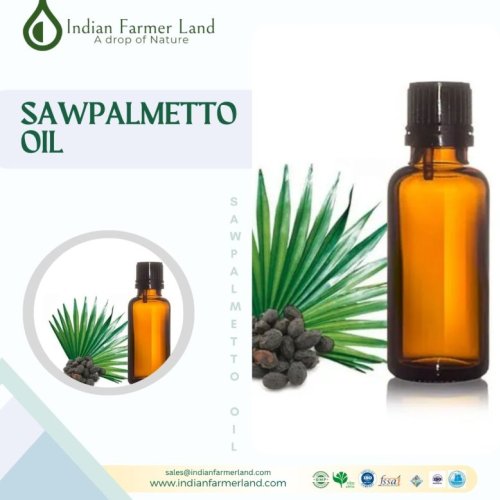
| Business Type | Manufacturer, Exporter, Supplier |
| Packaging Type | Yellow To Brown |
| Country of Origin | India |
| Type | Herbal Oil |
| Application | Hair & Skin Maintenance, Scalp Conditions, Hair Loss Reversal, Prostate Problems, Women's Health |
| Extraction Method | Supercritical CO2 Extraction |
| Composition | 1.5% Fruity Smelling Oil, Saturated And Unsaturated Sterols, Fatty Acids. Free Fatty Acids Comprise About 63% Of The Oil. |
| Properties | Fatty Oil, Fresh With Pungent Berry Scent And Hint Of Woodland Berries. |
| Blending | Mixes Well With Rosemary, Grapefruit, Seabuckthorn, Turmeric, Sage, Frankincense, And Peppermint Oil. |
| Odor | Characteristic |
| Assay | Minimum 85% Total Fatty Acids, Mainly Oleic Acid (C18:1), Lauric Acid (C12:0), And Myristic Acid (C14:0) |
| Material | Sawpalmeto Berries (Serenoa Serrulate Or Sereno Repens) |
| Safety Information | 100% Natural, No Additives, Safe And Effective In Treatment |
Description:
Sawpalmeto oil is acquired from small, scrubby palm tree, scientifically known as Sabal serulata or Serenoa repens belonging to Palmaceae family (Arecaceae). It grows up to 6 to 10 feet with large spiny toothed leaves on tree. Saw palmetto is native to Southeast area of the United States and the coastal plains of Florida and Texas. It widely spread throughout South Carolina and Louisiana.
Extraction:
Sawpalmetto oil is obtained from berries of Sabal serulata herb through supercritical CO2 extraction method.
Composition:
Sawpalmeto berries contain about 1.5% of a fruity smelling oil include saturated and unsaturated sterols and fatty acids.Free fatty acids (capric, caprylic, caproic, lauric, palmitic, and oleic acids) comprise about 63 % of this oil. The remaining oil is made up of ethyl esters of the above listed fatty acid and sterol, particularly beta-sitosterol and its glucoside.
Properties:
Sawpalmetto oil is fatty oil, fresh with pungent berry with a hint of woodland berries.
Blending:
It mixes well with rosemary, grapefruit, seabuckthorn, turmeric, sage, frankincense, and peppermint oil.
SAW PALMETTO OIL or Serenoa repens is used as a herbal medicine and in formulations to help improve scalp conditions, hair & skin maintenance and hair loss reversal formulations. Saw Palmetto was used by American Indians as hair, scalp and skin care.
Saw Palmetto has also received recognition in helping with prostate problem and women’s health. Saw palmetto is a natural product and is safe and effective in the treatment to reverse development of certain pathological conditions and combat alopecia also know as spot baldness. Scientific research confirms that majority of Saw Palmetto bio-active ingredients are of lipophilic nature, and therefore are extracted into the oil and well assimilated by the skin. This suggest that when Saw Palmetto oil is applied topically, the active ingredients of Saw Palmetto may be more bio-available and therefore provide more effective treatment.
Our Saw palmetto oil is produced using Saw palmetto berries (Serenoa Serrulate or Sereno repens). It is 100% natural and contains no additives. Our Saw palmetto oil has high content of Fatty oil.
Description Yellow to brown oily liquid with characteristic odor
Assay Minimum 85% total fatty acids, mainly Oleic acid (C18:1), Lauric acid (C12:0) and Myristic acid (C14:0). The supplement should be a fat soluble saw palmetto extract that contains 85 to 95% fatty acids and sterols. Liquid extract: This preparation has not been tested in any studies, so its effectiveness is not known. Tea: Saw palmetto can be taken as a tea. But its active ingredients (fatty acids) are not soluble in water.
| Business Type | Manufacturer, Exporter, Supplier |
| Packaging Type | Golden Yellow |
| Number Of Flower | Essential Oil |
| Application | Aromatherapy, Skin Care,Mind And Nerve Complaints,Anti-inflammatory,Bacterial Infections,Fungal Infections,Deodorant,Stress Relief,Reproductive Health,Fragrance Industry,Digestion,Respiratory Issues,Menstruation |
| Country of Origin | India |
| Material | Nardostachy Jatamansi (Spikenard Plant) |
| Extraction Method | Steam Distillation |
| Safety And Precautions | Keep Away From Children,May Cause Irritation Or Allergic Reactions In Sensitive Skin,Avoid Use During Pregnancy Or Lactation |
| Blending | Frankincense,Lavender,Myrrh,Orange,Petit Grain,Rose,Juniper,Patchouli,Palmarosa,Cypress,Lemon,Pine,Citrus,Clove,Neroli,Geranium,Sage |
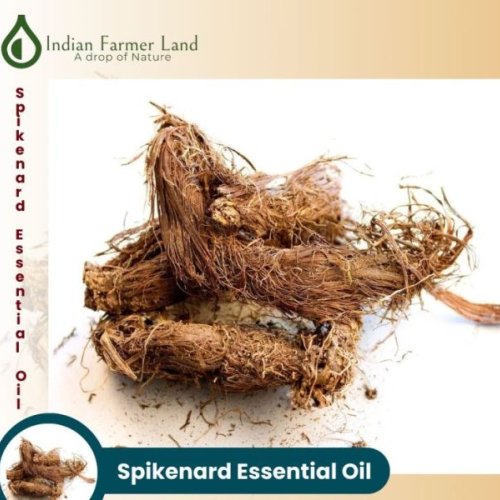
Spikenard is scientifically known as Nardostachy jatamansi an aromatic plant, belongs to Valerian family. Spikenard is a flowering plant and has pungent rhizome root which grows in the Himalayas, India, China and Nepal. Spikenard essential oil has many medicinal benefits and used in aromatherapy as well.
Extraction:
Spikenard oil is extracted from dried or crushed roots through steam distillation method.
Properties:
Spikenard essential oil has musty aroma and it is golden yellow in colour.
Composition:
The main components of Spikenard essential oil are bornyl acetate, valeranone, jonon, tatramenthyloxantricylodecanol, menthylthymyl ether and 1, 8 cineol.
Blending:
Spikenard essential oil is well mixes with other essential oil such as frankincense, lavender, myrrh, orange, petit grain, rose, juniper, patchouli, palmarosa, cypress, lemon, pine, citrus, clove, lavender, neroli, geranium and sage.
Uses:
- Spikenard oil is used in aromatherapy as it improves environment and stimulate circulatory system & also provide relief from tension, ease stress, migraine, nervous indigestion and insomnia.
- Spikenard oil has rejuvenating qualities as it is effective against skin issues such as acne, allergies, skin inflammation and rashes.
- It is used to treat mind and nerve complaints includes epilepsy, hysteria and mental fatigue.
- It has anti-inflammatory ability so it alleviates inflammation in any part of body such as in respiratory system, digestive and nervous system.
- It is effective against bacterial infections in the kidneys, bladder and urethra.
- It helpful in protecting skin from fungal infections such as dermatitis, psoriasis, patches on the skin, or painful itching.
- It is used as deodorant as it has pleasant aroma which provide relaxing.
- It helps in alleviating felling of stress, depression, anger, anxiety and panic as it has sedative quality.
- It helps to stimulate ovaries and uterus into secreting the hormones progesterone and estrogen and also maintain the health and efficacy of reproductive organs.
- It is used in the fragrance industry as it eliminates body odor.
- It helps in digestion as it calms stomach and hunger pain.
- It provides relief from cough, asthma and also other respiratory issues.
- It helps in maintaining menstruation.
Safety and Precautions:
- Keep away from children.
- It may cause irritation or allergic reactions in people with sensitive skin.
Avoid use while pregnant or lactating mothe
| Business Type | Manufacturer, Exporter, Supplier |
| Appearance | A clear transparent liquid. |
| Colour | Yellowish Colour Liquid |
| Odour | Fresh, Sweet, Citrusy, Fruity Orange like Odour. |
| Solubility | Soluble in 7 Parts of Ethanol (90%) |
| Specific Gravity @ 20°C | 0.800 – 0.850 |
| Specific Optical Rotation @ 30° C | +75° to +95° |
| Refractive Index @ 20°C | 1.410 – 1.510 |
| Residue o Evaporation | 0.5% – 5% |
| Storage | In well fitted container, in cool and dark place. |
Description:
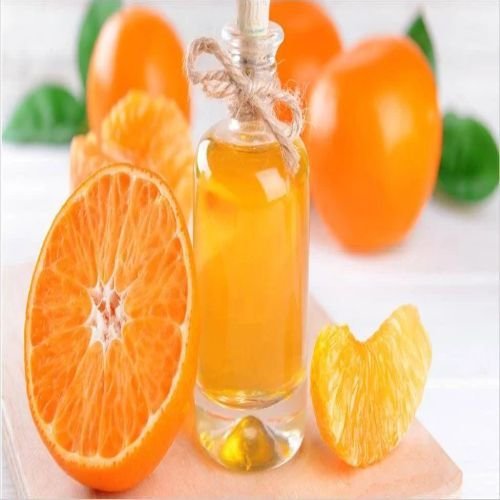
Sweet orange oil is obtained from orange plant, scientifically known as Citrus sinensis. Citrus plant belongs to Rutaceae family. Citrus plant is small grayish brown bark tree which bears circular fruits that is rougher and darker in comparison to other varieties of citrus. This citrus plant is native to China and commonly cultivated Meditterrean region, France, North and South America and Portugal.
Extraction:
Sweet orange oil is extracted from outer peel of orange fruits of Citrus sinensis through cold pressed method.
Composition:
Orange is composed of alpha pinene, citronellal, geranial, sabinene, myrcene, limonene, linalool and neral.
Properties:
Sweet orange oil has strong. Sweet, citrusy, intense and concentrated odor. It is deep yellow to orange in colour and has thin consistency.
Blending:
Sweet orange oil well blends with cinnamon, cloves, frankincense, ginger, lemon, grape fruit, neroli, patchouli, black pepper, sandalwood, ylang ylang, jasmine, bergamot, lime oil, lavender and vetiver.
Uses:
- It is added to cosmetics products like lotion, shampoo, acne treatment, soap, anti aging, wrinkle lifting, deodorants and creams.
- It is added to enhance flavor in drinks such as fruit juices or sodas, desserts, sweetmeats, biscuits, chocolates, confectionary and bakery items.
- It is used in furniture sprays, room freshener and bathroom or kitchen freshener because it contain cleansing agent i.e. D-limonene.
- It is used in aromatherapy as it soothes tensed muscles, nerves spasms and depression.
- It is effective against oxidative stress; prevent cancer as it has cancer fighting abilities.
- It is natural remedy for high blood pressure and improves blood flow and prevents hypertension.
- It has anti inflammatory quality; it fights against pain, infection and chronic obstructive pulmonary disease.
- It reduces wrinkles and acne, improves complexion; it is effective at fighting bacteria and inflammation.
- It is used for treatment of bone and joint pain.
- It promotes better digestion, helps in removal of gases, eases cramps and improves detoxification.
- It is used as mood booster as it uplift mood and brings relaxation.
- It protects skin from sunburn as it contains Vitamin C which slows the rate of skin damage from UV light exposure, pollution and toxicity.
- It has ability to fight microbial growth; it reduces cold sores and mouth ulcers.
- It cures issues like frigidity, erectile problems, decreased libido and loss of interest in sex.
- It encourages overall health, it is effective as a tonic which tones up all organs throughout the body, promotes metabolic system and boosts immunity.
Safety and Precaution:
It shows photo-toxicity, tastes bitter and can cause vomiting, nausea and loss of appetite.
First consult to professional aromatherapy practioner before using it during pregnancy, epileptic or have other medical problems.
| Business Type | Manufacturer, Exporter, Supplier |
| Botanical Source | Melaleuca sp |
| Description | Clear Mobile Colourless to Pale Yellow Liquid. |
| Odour | Characteristic |
| Specific Gravity | 0.885 – 0.906 |
| Refractive Index at 20°C | 1.475 TO 1.482 |
| Optical Rotation | +5° – +15° |
| Alpha –pinene | 1.0% – 6.0% |
| Sabinene | Less than 3.5% |
| Alpha terpinene | 5.0% – 13% |
| Limonene | 0.5% – 4.0% |
| Cineole | Max. 15% |
| Y-terpinene | 10% – 28% |
| P-Cymene | 0.5% – 12% |
| Terpinolene | 1.5% – 5% |
| Terpinen-4-ol | Min. 30% |
| Aromadrere | Max. 7% |
| Alpha-terpineol | 1.5% – 8% |
| Storage | In well fitted container, in cool and dark place. |
Description-
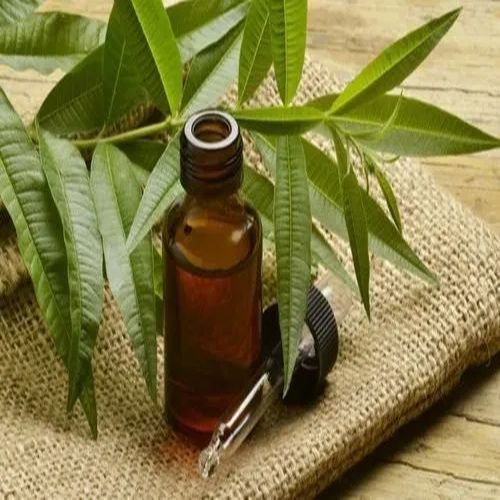
Tea tree is scientifically known as Melaleuca alternifolia, belongs to Myrataceae or myrtle family. Tea tree plant is indigenous to Southeast and Northeast Coast of New South Wales, Australia, also cultivated in New Zealand. It is an attractive thin leafed plant with soft; fine branch lets and it can grow fast and harvested as early as 6 months.
Extraction-
Tea tree oil is a volatile essential oil is derived mainly from Melaleuca alternifolia tree leaves, twigs and terminal branches through steam distillation method, although there are various extract methods such as distillation, Carbon dioxide supercritical extraction and solvent extraction.
Composition-
It is composed of 100 compounds, its main composition are Terpene hydrocarbon, monoterpenes & other alcohols.
Properties-
Tea tree oil is an essential oil having fresh and spicy camphoraceous odor and light yellow to early colorless and clear in appearance. Its aroma is warm.
Blending-
Tea tree oil is nicely blends with basil, bergamot, black pepper, chamomile, german, clary sage, cypress, eucalyptus, geranium, juniper, lavender, marjoram, lemon, thyme, ylang ylang, oregano, peppermint, pine, ravensara, rosemary, and oakmosss.
Uses-
- It is an active ingredient in variety of household and cosmetic products. Recommended Usage-
- Face Wash
- Shampoos
- Skin and nail creams
- Massage oils
- Laundry
- Detergents
- Tea tree oil is used in aromatherapy as it helps in alleviating chest and head congestion, stuffy nose and other symptoms of cold and coughs.
- It is used to heal acne and also relieve in skin inflammation as it reduce psoriasis and also used against eczema.
- It is antibacterial so used for treatment of chickenpox, cold sores, congestion and respiratory tract infection.
- It is used against fungal infection such as Candida, jock itch, athlete’s foot and toenail fungus as it is antifungal.
- It is used to eliminate body odor and reduce sweatiness, fight odor.
- It is used to softens dry cuticles and eliminate toenail fungus.
Safety and Precaution-
- Avoid undiluted tree oil, it may cause irritation. It may cause allergic reaction such as rashes usually mild & itchy which may lead to blistering.
- It may cause dizziness and swelling in throat.
- It may be toxic for pet as it may cause hypersensitivity reaction.
| Business Type | Manufacturer, Exporter, Supplier |
| Packaging Type | Glass Bottle |
| Country of Origin | India |
| Type | Essential Oil |
| Material | Tagetes Minuta Plant |
| Color | Yellow To Reddish-amber |
| Aromatic Description | Fresh, Sweet, Floral, Slightly Fruity |
| Major Constituents | (Z)-B-Ocimene, Dihydrotagetone, (Z)-Tagetone, (Z)-Tagetenone, (E)-Tagetenon |
| Extraction | From The Leaves, Stalks, And Flowers Of Tagetes Minuta Plant |
| Chemical Composition | Tagetone, Limonene, Valeric Acid, Ocimene, Etc. |
| Application | Effective In Cases Of Infection, Weeping Wounds, And Chest Infections |
Description:
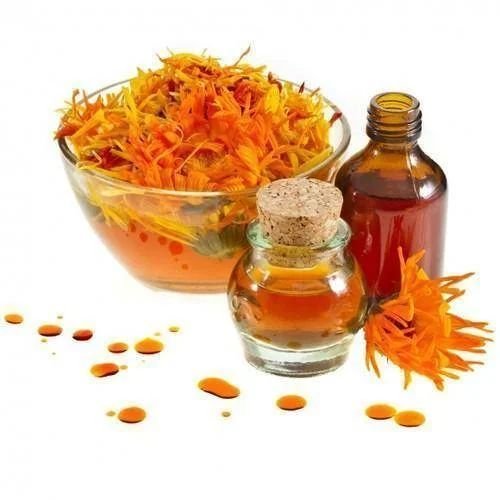
Tegetus is also known as Mexican marigold, Tagetes oil is obtained from Tagetes minuta plant which belongs to compositae family. Tagetes oil is native to Africa and also grows in France and North America and its growth reaches up to 2 meters in height and has tiny white or pale yellow flowers with deeply divided deep green feathery leaves.
It grows up to 2 metres tall and produces tiny white or pale yellow flowers. Native to South America, it was introduced to Europe during the Spanish conquests. Tagetes minuta is a popular companion plant in gardening, because its roots produce a compound, which keeps slugs, pests and weeds at bay. In Peru, minuta is known as ‘huacatay’ and made into puree and seasoning that give local dishes a unique herbal flavor. It is said to taste like a mixture of mint, coriander and basil. It has been used this way since the ancient Inca civilization. Tagetes belongs to the same family of plants as the dahlia and daisy (Asteraceae) The leaves and flowers are a good insect repellent and are often seen hanging from native huts to deter swarms of flies and mosquitoes. In a 5% dilution, tagetes oil has been used to kill maggots in open wounds, while the roots and seeds have been found to help rid the body of poisons.
It is an ingredient of many foot treatment preparations and is also used in some perfumes.
Aromatic Description: Fresh, sweet, floral, slightly fruity.
Major Constituents of Egyptian Tagetes Oil:
(Z)-B-Ocimene
Dihydrotagetone
(Z)-Tagetone
(Z)-Tagetenone
(E)-Tagetenon
Although very few people buy this oil for the fragrance, it is a very effective oil when used in cases of infection and especially weeping wounds and chest infections.
Oil properties
Tagetes oil has a wild, sweet, fruity almost citrus-like smell and is yellow to reddish-amber in color. It is of medium viscosity that can turn thick and even gel-like if exposed to the air for a long time. The leaves and flowers are a good insect repellent and are often seen hanging from native huts to deter swarms of flies and mosquitoes. In a 5% dilution, tagetes oil has been used to kill maggots in open wounds, while the roots and seeds have been found to help rid the body of poisons.
After the Boer war in South Africa, Australian troops brought plants to their native land where it grew profusely. It is an ingredient of many foot treatment preparations and is also used in some perfumes.
Extraction
Tagetes oil is extracted from the leaves, stalks and flowers, picked when the seeds are just starting to form.
Chemical composition
The main chemical components are tagetone, limonene, valeric acid and ocimene etc.
| Business Type | Manufacturer, Exporter, Supplier |
| Appearance | Colourless To Pale Yellow Clear Liquid. |
| Country of Origin | India |
| Form | Liquid |
| Botanical Source | Cananga odorata |
| Odour | Fresh, floral, sweet, slightly fruity, delicate fragrance |
| Solubility | Insoluble in water, soluble in ethanol & organic solvents. |
| Weight per ml | 0.948 – 0.972 |
| Optical Rotation | -25° – +2° |
| Refractive Index | 1.490 – 1.511 |
| Storage | In Well Fitted Container in Cool and Dark Place |
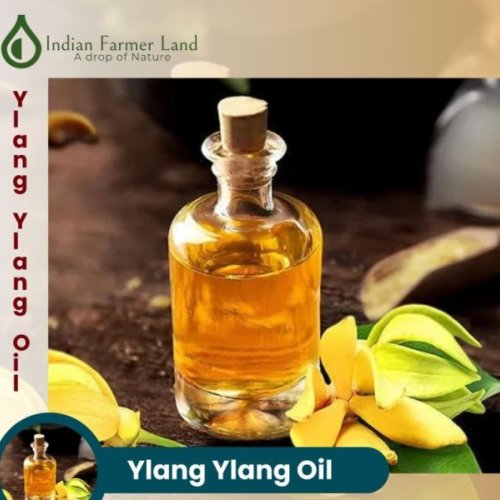
Description:
Ylang ylang is scientifically known as Cananga odorata, it is native to Philippines, Malaysia and Indonesia as ylang ylang are usually found in rainforest of Asian and South Pacific Islands. Ylang ylang is a tropical tree, belongs to Annonceae. It grows well in full or partial sun and acidic soils up to 12m in temperate , having smooth and oval leaves and 13-20cm long and its flowers is drooping, long stalked with green yellowish petals and sea star in shape.
Extraction:
Ylang ylang oil is acquired from fresh flowers of ylang ylang tree through steam distillation method.
Composition:
The main components of ylang ylang tree are benzyl acetate, benzyl benzoate linalool, caryophyllene, geranyl acetate, p-cresyl methyl ether, pinene, eugenol, farnesol and farnasene.
Properties:
Ylang ylang have sweet, clear and yellow in colour, its aroma is strong, fresh and slightly fruity.
Blending:
Ylang ylang oil is nicely blends with bergamot, grapefruits, lavender and sandalwood.
Uses:
- Ylang ylang oil is the key ingredient in legendary perfume.
- It provides relax to body and soul.
- It is effective against insomnia, fatigue and frigidity.
- It regulates production of sebum which protects hair and skin from drying.
- It has many skin care uses are as they maintain skin moisture, treats eczema, clears and heals acne.
- It promotes hair growth and acing as natural conditioning agent.
- As it has anti bacterial property, it is effective against skin irritation and redness.
- It helps in nervous breakdowns, acute depression, anxiety, sadness and chronic stress.
- It heals wounds and infections due to its anti septic property.
- It promotes healthy blood pressure levels.
- It is used for treatment of stomach infections, intestine, colon and urinary tract infections.
- It reduces tension and provides calmness and relaxing effects.
- It lowers down the nerve damage due to diabetes complications
Safety and Precaution:
- Avoid ylang ylang oil contact with eyes.
- Do not use ylang ylang oil while pregnant or nursing women.
- Keep away from reach of children under the age of six years.
- Do not take in excessive amounts as it can cause sensitivity, nausea and headache.
| Business Type | Manufacturer, Exporter, Supplier |
| Type | Essential Oil |
| Color | Clear |
| Packaging Type | Glass Bottle |
| Application | Aromatherapy,Massage,Diffuser |
| Ingredient | 100% Pure Eucalyptus Oil |
| Material | Eucalyptus Leaves |
| Scent | Fresh, Camphoraceous |
| Organic | No |
| Benefits | Clears Sinuses, Eases Breathing |
| Warnings | For External Use Only |
Description-
Eucalyptus is an evergreen tree which grows faster, native to Australlia and cultivated worldwide such as in India, Europe & South Africa. Eucalyptus oil is obtained from Eucalyptus globulus belongs to Myrtaceae family. Eucalyptus globulus oil has high content cineole up to 60-70%.
Extraction-
Eucalyptus oil is extracted from fresh or partially dried leaves and young twigs through steam distillation.
Composition-
Its composition are cineole, α-pinene, β-pinene, α-phellandrene, 1, 8-cineole, limonene, terpinen-4-ol, aromadendrene, epiglobulol, piperitone and globulol.
Properties-
Eucalyptus oil is colorless to pale yellow liquid in appearance; its odor is aromatic and camphoraceous, a strong woody and sweet odor taste is followed by a cold sensation.
Blending-
Eucalyptus oil is particularly well blends with benzoin, thyme, lavender, lemongrass oil, lemon, pine, frankincense, rosemary, marjoram and cedar wood oil.
Uses–
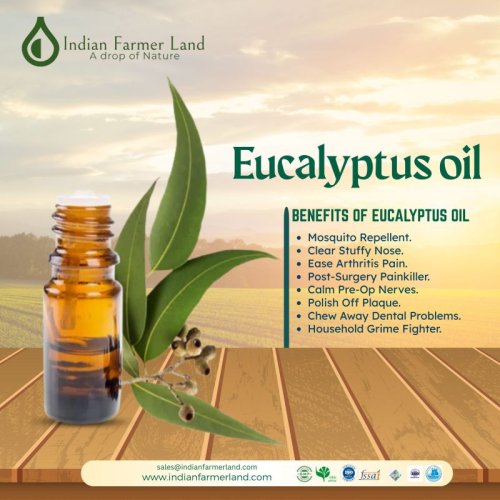
- Diluted form of eucalyptus used for respiratory issues as it relieves from pain and inflammation of respiratory tract, mucous membrane, coughs, asthma, bronchitis, sinus pain and other respiratory infections as well.
- It is used for flavoring various products including baked goods, confectionary, meat products and beverages.
- It is used as an insect repellant and biopesticide.
- It is also used in aromatherapy.
- It is used for healing fever and reducing body temperature.
- It also helps in control blood sugar.
- It is used as fragrance as it provides nice, fresh fragrance in perfume and cosmetics with adding antimicrobial properties in soap, laundry and detergent.
- It is used as odor remover, air cleanser and spot remover on carpet, clothes and basically fabric.
- It is used for hair nourishment as it gives hair a nice moisturizing and to ward off dandruff and an itchy scalp.
- It is used as cleaner to remove grease and grime and rejuvenate sore hands and feet.
- It is used for treating cold and flu as it removes toxins and harmful microorganisms which make body feel sick.
- It is used as ingredient in mouthwashes, liniments, ointments, toothpaste, cough drops and lozenges.
- It boosts immune system response.
- It is analgesic in nature, provide relief from pain.
- It stimulating mental activity and also increases blood flow to the brain.
Safety and Precautions-
Avoid excessive use of eucalyptus oil as it can lead to skin sensitization.
Do not take orally eucalyptus oil without doctor supervision.
Do not give children under age 6 and not even in cough drops with eucalyptus oil.
Pregnant and breast feeding should not take eucalyptus oil.
Eucalyptus Oil :-
Botanical Source – Eucalyptus globules
Appearance – Colourless or pale yellow liquid
Odor – Reminiscent of 1, 8-cineol
Identification
TLC Meets the requirement
GC Meets the requirement
Specific Gravity – 0.904 – 0.927
Specific Rotation – 0° to +10°
Refractive Index at 20°C 1.458 to 1.470
Solubility – Soluble in 5 volume of ethanol (70%)
Eucalyptol – Min. 60%
Storage – Store in well closed containers, in cool and dry storage Area.
Specification of Eucalyptus Oil:
Testing Protocol – BP
Appearance – Colourless or pale yellow liquid
Odour – Reminiscent of 1, 8 cineol
Identification
TLC – Meets the requirement
GC – Meets the requirement
Relative Density – 0.906 – 0.927
Specific Rotation – 0° to +10°
Refractive Index at 20°C – 1.458 to 1.470
Solubility in Alcohol – Soluble in 5 volume of ethanol (70%)
Aldehyde – Meets the requirement
Chromatographic Profile:
α-pinene – 0.05% to 10%
β-pinene – 0.05% to 1.5%
Sabinene – Maximum 0.3%
α-phellandrene – 0.05% to 1.5%
Limonene – 0.05% to 15%
1,8 Cineole – Min. 70%
Camphor – Max. 0.1%
Storage – Store in well closed containers, in cool and dry storage area
| Business Type | Manufacturer, Exporter, Supplier |
| Storage | In Well Fitted Container In Cool And Dark Place |
| Packaging Type | Bottle |
| Material | Cymbopogon Plant |
| Application | Mosquito Repellant, Aromatherapy, Flavoring Agent, Deodorants, Body Sprays |
| Specific Gravity | 0.840 - 0.900 |
| Optical Rotation | +4° - -2° |
| Refractive Index | 1.445 - 1.478 |
| Solubility | Soluble In 0.8 To 1.5 Vol. Of 80% Alcohol |
Description:
Citronella plant is known as Cymbapogon plant, belongs to lemongrass family. Citronella oil can be derived from two varieties such as Ceylon variety, botanical known as Cymbopogon nardus while other one is Java variety, scientifically termed as Cymbopogon wintarianus. It grows in Asian countries and also in South Pacific. Due to its rich, crispy lemony aroma, it bears citronella name.
Extraction:
Citronella oil is obtained from fresh plant of Cymbopogon through steam distillation method.
Composition;
Its main constituents are citronella, geraniol, citronellol, citronellyl acetate, beta-bourbonene, geranyl acetate, elemol, L-borneol, linalool and nerol.
Properties:
Citronella oil is slight yellow and colorless in color. It has grassy and lemon scent.
Blending:
Citronella oil is well blends with other essential oils such as cedar wood, clary sage, tea tree, eucalyptus, geranium, lavender, lemon, peppermint and rosemary.
Uses:
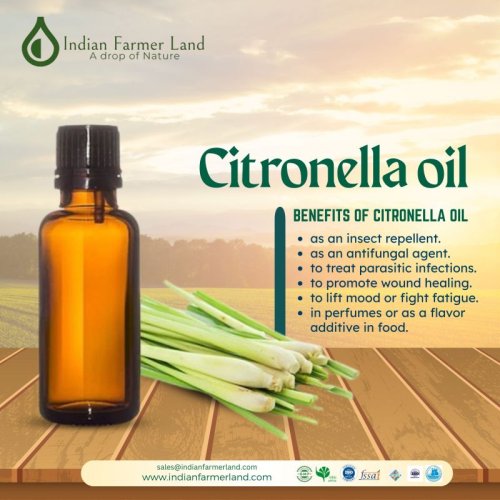
- Citronella is used as ingredient in mosquito repellant, it prevent mosquito bites.
- Citronella has antifungal property so that it inhibits or suppressed fungal growth in ear, nose and throat regions.
- It is used in aromatherapy as it induce positivity and happiness in mind, uplifts spirit and provides relieve from stress as it reduces blood pressure, heart rate and also breathing rate.
- It is added to flavor in foods, baked foods and beverages.
- It is effective against infections in wounds; also protect colon, urethra, urinary bladder, stomach, intestines, urinary tracts, prostate and kidneys from infections.
- It helps in relieving spasms of the muscles; respiratory system and nervous system and prevents menstrual spasm as well.
- It has anti-inflammatory property; it reduces inflammation of liver, stomach and other parts of digestive system.
- It is used in deodorants and in body sprays, Citronella oil has a refreshing and body odor- removing property.
- It is diuretic, increases urination and eliminates toxic and disposes body wastes from body.
- It increases sweating and promotes removal of toxins and provides lighter feeling and healthy skin to body.
- It is effective against fever and also brings down temperature.
- It maintains the function of stomach properly and also clears stomach infections.
- It is stimulant as it stimulates blood circulation, immune mechanisms and metabolism of body, secretions & discharges of hormones and enzymes from glands, brain and also encourages activity of nervous system.
- It tones up digestion, excretion, nervous system and brain.
- It kills intestinal worms, round worms and tape worms.
Safety and Precautions:
Avoid using citronella while pregnant as it can cause mild skin irritation.
It can cause irritation, dermatitis or sensitization of skin.
Specification of Citronella Oil:
Organoleptic Properties:
Appearance – Fluid liquid
Colour – Light yellow
Odour – Strong odour of citronella.
Botanical Source – Cymbopogon Winterianus Jowitt
Physico Chemical Properties:
Specific Gravity – 0.840 – 0.900
Optical Rotation – +4° – -2°
Refractive Index – 1.445 – 1.478
Solubility – Soluble in 0.8 to 1.5 vol. of 80% alcohol
Storage – In well fitted container in cool and dark place.
| Business Type | Manufacturer, Exporter, Supplier |
| Color | Pale Yellow |
| Packaging Type | Glass Bottle |
| Usage | Aromatherapy, Massage, Skincare |
| Form | Liquid |
| Type | Essential Oil |
| Material | Lemongrass |
| Scent | Citrusy, Fresh |
| Origin | India |
| Attributes | 100% Pure, Therapeutic Grade |
Description:
Lemon grass oil is acquired from Cymbopogan citratus, belongs to grass family named as Poaceae; it is native to tropical and subtropical regions, it is medicinal herb of India and also cultivated in other parts such as Africa, Indonesia, Sri Lanka, China, Malaysia, Cambodia. Lemongrass plant grows well in dense clumps; it has bright green, sharp edged leaves. It grows up to 6 feet in height.
Extraction:
Lemongrass oil is derived from leaves of the Cymbopogon plant through steam distillation.
Composition:
Its main constituents are myrcene, citronella, geranyl acetate, nerol, geraniol, neral, limonene, terpineol, methyl heptenone, dipentene, farnesol and citral.
Properties:
Lemongrass oil is light and has thin consistency with a pale or bright yellow in color and fresh lemony smell with earthy aroma.
Blending:
Lemongrass oil is well mixes with other essential oils such as basil, cedar wood, coriander, geranium, jasmine, lavender and tea tree.
Uses:
- It is used for aromatherapy as it provides relieve from muscle pain and reduces body pain.
- It is used to add fragrance to cosmetics, soaps, air fresheners and home deodorizers.
- It provides strength to hair follicles and prevents hair loss and itchy scalp. As it kills bacteria and soothes hair and leave hair shiny, fresh and odor free.
- It is used to flavor tea and soups; it stimulates soothing, relaxing and balancing and also has property to flush out all toxins from body so it detoxify digestive tract, liver, kidneys, bladder and pancreas.
- It is used as cleansers for all skin type as it has astringent and antiseptic properties; it provides glowing skin and sterilizes pores, serve as natural toner and strengthen skin tissues.
- Lemongrass contains geraniol and citral content, it is natural bug repellant.
- It provides relieve from stress and encourage sleep in insomnia patients.
- Lemongrass oil is used for treatment of muscle spasms, back aches, sprains and cramps as it has muscle relaxing quality.
- It reduces inflammation and helps in treatment of allergic diseases like asthma, arthritis, Alzheimer, cancer, cardiovascular, diabetes, high blood pressure and also high cholesterol levels and Parkinson’s diseases.
- It is effective against stomach issues; it helps to relieve pain from gas irritation in stomach, bowels and prevent gastrointestinal disorders such as gastric ulcers.
- It has antioxidant property, it has ability to fight against free radicals and inhibit growth of cancer cells.
Safety and Precautions:
- Some people, who are suffering from lung issues, do not inhale lemongrass oil as it has toxic side effect after inhaling.
- If some people have skin sensitivity, it can create rash, discomfort or burning sensation.
- Do not use lemongrass oil as it stimulates menstrual flow so there is a slight chance of miscarriage.
- Avoid use of lemongrass oil for children or nursing mothers.
Specification of Lemongrass Oil:
Organoleptic Properties:
Appearance—Fluid liquid
Colour – Light yellow to pale yellow with reflection of reddish brown colour.
Odour – The odour is strong, sharp, pungent & fresh-grassy lemon type, Herbaceous or Tea like odour.
Botanical Source – Cymbopogon flexuous, Cymbopogon citrates (Fam: Gramineae)
Physico-Chemical Properties:
Specific Gravity – 0.892 – 0.925
Refractive Index – 1.481 – 1.492
Optical Rotation – -3° to +4°
Assay by GC – Min. 70% Citral content
Storage – In well fitted container in cool and dark place.
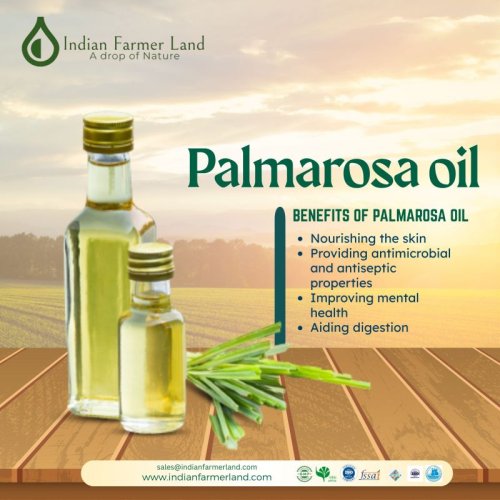
| Business Type | Manufacturer, Exporter, Supplier |
| Application | Aromatherapy, Skincare, And Perfumery |
| Packaging Type | Glass Bottle |
| Color | Pale Yellow To Light Brown |
| Type | Essential Oil |
| Material | Cymbopogon Martini |
| Scent | Sweet, Floral, And Rosy |
| Size | 10ml |
| Origin | India |
| Benefits | Moisturizes Skin, Balances Sebum Production, And Promotes Relaxation |
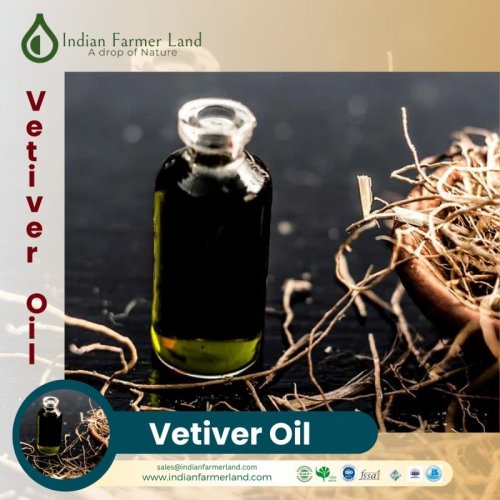
| Business Type | Manufacturer, Exporter, Supplier |
| Application | Aromatherapy, Massage,Skincare,Diffuser,Topical Application |
| Pack Type | Amber Glass Bottle |
| Type | Essential Oil |
| Color | Dark Brown |
| Material | Vetiver |
| Scent | Earthy, Woody |
| Origin | Natural |
| Organic | No |
| Benefits | Relaxation, Stress Relief |
| Recommended Dilution | 2-3% |
| Safety Precautions | Perform A Patch Test Before Use |
Description:
Vetiver oil is scientifically known as Chrysopogon zizanioides or in Tamil called as Vetiveria zizanoides, a perennial grass which belongs to the Poaceae family. It is native to India, Western and Northern India. It grows up to 1.5 meters and has tall stems and long, thin and rigid leaves and its flowers are brownish purple in colour.
Extraction:
Vetiver oil is extracted from roots of vetiver plant through steam distillation methods.
Composition:
Its main components are khusimol, vetiselinenol, cyclococamphan-12-ol, alpha-cadinol, alpha-vetivone and beta-vetivenene.
Blending:
Vetiver oil well blends with ylang ylang, bergamot, jasmine, sandalwood, clary sage, patchouli, spikenard, angelica and lavender.
Properties:
Vetiver oil is golden or dark brown in colour and thick in consistency. It has heavy, smokey, earthy, herbaceous and spicy in aroma.
Uses:
- Vetiver oil awakes feeling of sexual desire and enhances libido. It is effective against sexual disorders like frigidity, impotence and loss of libido.
- It provides relief in insomnia, restlessness and nervousness.
- It is used in making perfumes for the body, room fresheners and coolers.
- It is used an ingredient in soaps, cosmetics.
- It is used as flavoring agent in beverages, sorbets and food stuffs.
- It has anti inflammatory qualities; it provide relief from inflammation in circulatory and nervous system, effective used in treatment of inflammation which caused by sun stroke, dehydration and loo.
- It is used for treatment of nervous disorders, it reduces stress and tension, dispel anger, hysteria, irritability, lack of control over limbs, spasms, and Parkinson’s diseases and reduce neurotic behavior.
- It speed up eradication or reduces scars and marks from skin. It is useful in removing post delivery stretch marks for pregnant women, fat cracks, after spots left by pox and burns.
- It is antibacterial; prevent growth of bacteria which cause sepsis and safe oil to be applied externally or internal organs to protect wounds from sepsis.
- It is used as tonic on body as it tones up all system of body like digestive, respiratory, circulatory, excretory, immune, endocrine and nervous system.
- It rejuvenates body, gives strength, encourage immune system and keeps metabolic system in order.
- It is used for treatment of rheumatism, arthritis, gout, muscular aches, dryness and cracking of the skin.
Safety and Precautions:
- Do not use vetiver oil during pregnancy or beast feeding women; it may cause miscarriage.
- Keep from reach of children and consult a doctor before using it on children.
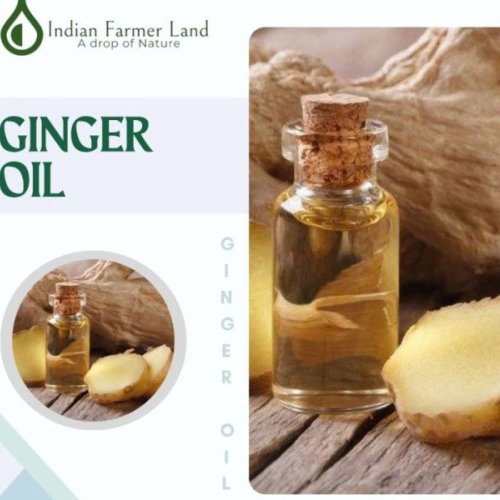
| Business Type | Manufacturer, Exporter, Supplier |
| Application | Aromatherapy, Massage, Skincare |
| Packaging Type | Glass Bottles |
| Color | Pale Yellow |
| Type | Essential Oil |
| Material | Ginger |
| Size | 10ml |
| Scent | Warm And Spicy |
| Attributes | 100% Pure And Natural |
| Benefits | Eases Nausea, Improves Digestion |
| Warnings | For External Use Only, Possible Skin Sensitivity |
Description-
Ginger is a warm, spicy herb belongs to Zingiberaceae family, scientifically known as Zingiber officinale; this plant grows up to 3-4 feet in height with narrow stems, green leaves and yellow flowers. Ginger is originated in India and South China and also cultivation in Asia, West Africa and the Caribbean. Ginger oil is warming and energizing so it has many application in medical and ayuveda.
Extraction-
Ginger oil is extracted from the roots of herb Zingiber officinale through steam distillation method.
Composition-
Ginger oil is composed of various components are as follows- geranial,1-8 cineole, Zingiberene, B- bisabolene, B-sesquiphellandrene, α-pinene, β-pinene, camphene, linalool, bornneol, γ-terpineol, nerol, geraniol and geranyl acetate.
Properties-
Ginger oil has thin consistency. Light yellow in colour and has slightly pungent due to its acrid compound gingerol and spicy in aroma, medium to watery in viscosity.
Blending-
Ginger oil is well blends with many essential oil such as cedar wood, lemon, lime, eucalyptus, frankincense, geranium, rosemary, sandalwood, patchouli, myrtle, rosewood, neroli, orange and ylang ylang.
Uses-
Ginger oil contains Zingibain which is anti inflammatory in nature so it helps in treatment of muscle aches, arthritis, and migraine.
- It is used for treatment for various stomach issues such as colic, indigestion, diarrhea, spasm and stomach aches.
- It is used in aromatherapy as it brings feeling of courageous and self assurance and provides relief from depression, mental stress, dizziness, restlessness, exhaustion and anxiety.
- It is analgesic in nature as it provides relieve from pain due to its Zingibain component, it reduce prostaglandin, it helps in treatment of muscle aches, headache, arthritis, rheumatism and migraine.
- It has carminative effect; it is used to treat food poisoning, motion sickness and vomiting.
- It is anti bacterial in nature so it helps in intestinal infections and bacterial dysentery.
- It is also effective against yellow fever and malaria.
- It is used to provide relief from menstrual illness such as irregular, menstrual cramps and painful menstrual discharges.
- It is also helpful in respiratory issues such as coughs, flu, asthma, breathlessness and bronchitis as it helps in removing mucus from throat & lungs.
- It is a heart ailment as it strengthen heart health, it reduces cholesterol level and prevent blood clotting lead to reduce risk of heart attack and stroke.
- It is aphrodisiac in nature as it eliminates impotency and it halts premature ejaculation.
- It is used to treat kidney stone issue as it dissolves stones in kidney.
- It is used for hair care as it helps in controlling dandruff.
- It is used to treat cancer as it
- It is used to add in meals such as meat as a preservative and flavoring agent.
Safety and Precautions-
Excessive use of ginger oil can cause skin sensitization.
Its high concentration also leads to photosensitivity.
As ginger oil is strong so it should be used carefully and sparingly.
Specification of Ginger Oil:
Appearance – Free flowing liquid
Colour – Pale yellow
Odour – Odour is fresh and woody, characteristic odour of fresh ginger, warm, Spicy the sweet and heavy under note is Tenacious, Sweet & rich almost Balsamic floral.
Physio Chemical Properties:-
STANDARD
Specific Gravity (at 20° C) – 0.870 – 0.882
Refractive Index (At 20°C) – 1.488 – 1.495
Optical Rotation (At 20°C) – -47° – -28°
Zingiberenes (By GC) – (UP to 70%)
Solubility – Soluble in Alcohol and oils, practically insoluble in water.
Storage – Store in well closed containers, in cool and dark storage area.
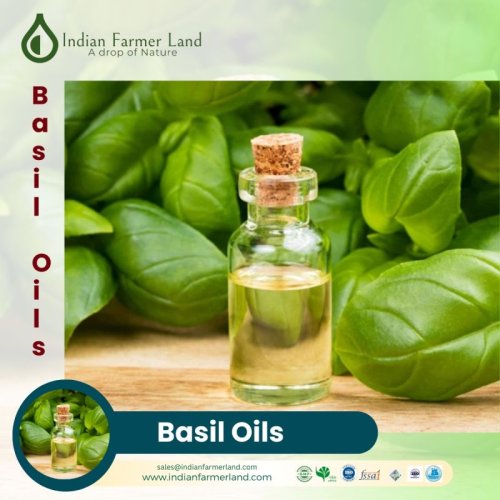
| Business Type | Manufacturer, Exporter, Supplier |
| Country of Origin | India |
| Cultivation Type | Natural |
| Form | Liquid |
| Type | Essential Oil |
| Packaging Type | Well-closed Containers |
| Application | Italian Dishes And Seasoning Blends,Digestive Aid,Respiratory Health,Pain Relief,Mental Wellbeing,Skin & Hair Care,Infections |
| Material | Basil (Ocimum Basilicum) |
| Color | Pale Greenish-yellow |
| Extraction Method | Steam Distillation From Leaves And Flowering Tops |
| Physical Properties | Thin, Watery,Crisp, Sweet, And Herbaceous |
| Key Uses | Used As An Aromatic Ingredient In Italian Dishes And Seasoning Blends,Digestive Aid, Respiratory Health, Pain Relief, Mental Wellbeing, Skin & Hair Care, Infections |
Description-
Basil oil is an annual herb, known as Ocimum basilicum, belongs to Lamiaceae family. It is originated from Tropical Asia and Pacific Islands, commonly cultivated in Europe, Central Asia, India and Southeast Asia. It grows up to 1 meter, its flower from white to pink. Basil essential oil is a source of Vitamin A, Magnesium, Potassium, Iron and Calcium. Basil oil used for various medicinal purposes.
Extraction-
Basil oil is extracted from leaves and flowers of Ocimum basilicum through steam distillation.
Composition-
Its major constituents are linalool, fenchol, eugenol, methyl chavicol (Estragole) and β-caryophyllene and other minor constituents are α-pinene, camphene, β-pinene, myrcene, limonene, cis-ocimene, γ-terpineol, citronella, geraniol and methyl cinnamate.
Properties –
Basil oil is a pale greenish yellow and clear in colour and watery in viscosity. Its aroma is crispy, light.
Blending-
Basil oil is well mixes with bergamot, lemon, juniper, eucalyptus, neroli, lavender, clove bud, geranium, Melissa, lime, hyssop, marjoram and rosemary.
Uses-
- Basil oil is used for culinary purpose as active ingredients for Italian dishes.
- It is used to treat nausea, sickness, indigestion, constipation, diabetes.
- It is ingredient in skin care supplement as it enhances the luster of dull looking skin and also improves the tone of skin.
- It also helps in reduce the symptoms of acne.
- It is used to improve the luster of hairs and also effective against fatigue, flaky scalp.
- It is used in massage oil as basil oil is analgesic, it provide relief from pain, soothes muscle after exercise.
- Basil oil has carminative properties used to treat indigestion, constipation, stomach cramps and flatulence.
- As basil oil have colic quality, also used to alleviate bowel pain.
- It is used to providing relief from cold, influenza and associated fever.
- Basil oil is antispasmodic, used to treat whooping cough.
- It is used to treat asthma, bronchitis, and sinusitis.
- It is used to treat diarrhea and mucous discharges
- Basil oil used to treat various infections such as cuts, wounds, skin infection and bladder infection.
- It is used to reduce mental stress, also improve alertness, used to treat nervous tension, mental fatigue, melancholy, migraines and depression. It provides mental strength and clarity.
- It is used in aromatherapy because of its crisp smelling and refreshing aroma, used to re-energize and soothing effect on muscle.
- It is used to increase metabolic function of body, also improve blood circulation as well.
- It is effective against occasional sleeplessness.
- It is also used against burns, bruises, scars injuries and surgical recovery, sprains and headaches.
- It used to prevent vomiting, nausea, sickness.
Safety and Precaution-
Do not use in excessive amount as it may be carcinogenic due to its methyl clavicol content.
Avoid use of basil oil while pregnant or breast feeding.
Keep basil oil away from reach of children.
It can cause low blood sugar in some people.
Do not use people who are suffering from bleeding disorder.
Specification of Basil Oil:
Botanical Source – Ocimum basillicum
Description – Pale yellow colour clear liquid, characteristics odour. Pleasant smell.
Acidity – Complies
Solubility – Soluble in ethanol (70%)
Physio –Chemical Properties:-
Optical Rotation – 8° – -1°
Wt. /ml (gms/lit.) – 0.930 – 0.946
Refractive Index – 1.500 – 1.509
Assay by GC – NLT 70% Methyl Chavicol content
Storage Condition – Store in well closed container, in cool and dark storage area.
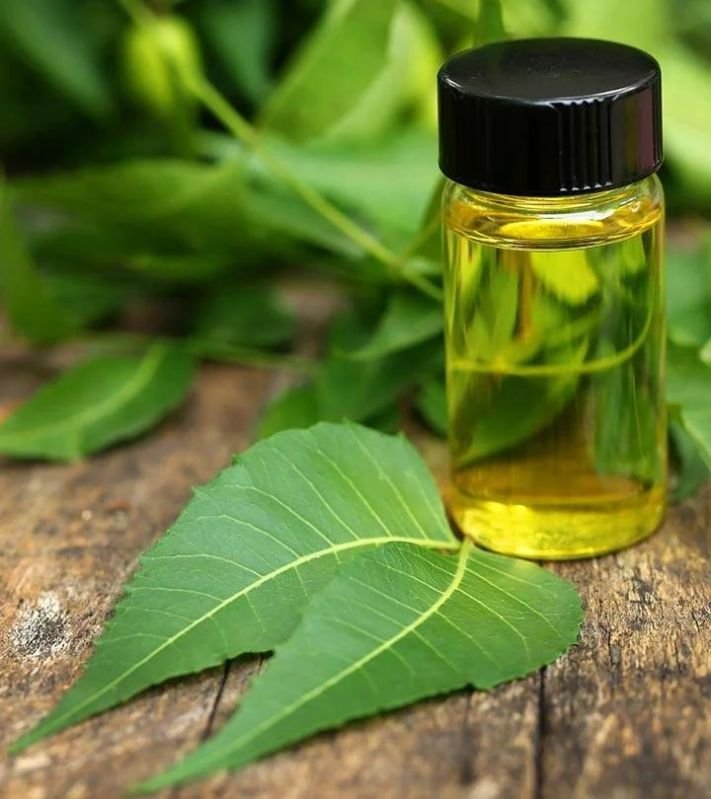
| Business Type | Manufacturer, Exporter, Supplier |
| Appearance | A brown coloured, viscous liquid |
| Solubility | Insoluble in water |
| Odour | Characteristics aroma of typical neem |
| Color | Not deeper than 45 |
| Azadirachitin (A+B) | NLT 1000 ppm |
| Moisture and Insoluble impurities | NMT 0.3% |
| Refractive Index (at 40°C) | 1.459 TO 1.472 |
| Saponification Value | 180 to 205 |
| Iodine Value | 65 to 80 |
| Acid Value | NMT 15 |
| Unsaponifiable Matter | NMT 2.0% |
| Titre°C | 36°C |
| Total Heavy metals | Less than 20 ppm |
| Arsenic | Less than 3 ppm |
| Lead | Less than 5 ppm |
| Storage | In well fitted container in cool and dark place |
Description:
Neem oil is derived from Azadirachta indica, which belongs to Meliaceae family. Neem tree is native to India and its sub continent such as Nepal, Pakistan, Bangladesh and Sri Lanka. It grows well in tropical and semi tropical regions. It is fast growing tree and it can grow up to 15-20 mts and its branches wide spread. Neem oil has many skin and health care benefits.
Extraction:
Neem oil is acquired from seeds kernels through cold pressed or by solvent extraction of the neem.
Properties:
Neem oil is golden yellow, yellowish brown, reddish brown and dark brown or greenish brown in colours depending on harvest time and also on its growing condition. It has strong bitter aroma and have combination of peanut and garlic.
Composition:
Neem oil is composed of triglycerides, triterpenoid (Azadirachitin) and contains steroids such as campestral, beta-sitosterol and stigmasterol.
Blending:
Neem oil is well blends with sweet almond oil, grape seed oil or jojoba oil.
Uses:
- Neem oil has healing property because it contains Vit. C, Beta carotene and is rich in fatty acids and glycerides.
- It is used for the treatment of malaria, tetanus infections, tuberculosis, jaundice, ringworm, lice, fungal and bacterial infections of the skin, hives and scabies.
- It is effective against skin disorders such as eczema, psoriasis, septic sores, rashes, burn and acne.
- It has antiviral and antibacterial properties.
- It provides relief from redness include facial redness, bumps and pimples.
- Neem oil is used as an organic pesticide because of its limonoids contents which helps to kill varroa population.
- Neem oil is used in hair care as it prevent dandruff and other hair problems, protects scalp skin from damage by free radicals and nourishes and conditions the scalp and hair , provide smooth and luxurious shine to hair
- Neem oil promotes thicker, stronger and more luxurious hair growth and provides conditioning to dry and nourishment to hair.
- Neem oil is a natural insecticide as it prevents unwanted pests from destroying plants and reduce pest by repelling them and inhibiting their larval growth, fertility, mating and egg lying.
- Neem oil rejuvenates skin cells, it smoothes wrinkles, stimulates collagen, alleviate dry skin and reduces eczema and acne and restore elasticity.
- It has insect repellant property so that used as mosquito repellant and prevent malaria.
- It provides relief from head lice and nits as neem oil contain azadirachitin, an insecticidal ingredient which prevent growth of lice.
- It is effective against human fungi such as microsporum, Candida, geotrichum etc.
Safety and Precaution:
- Avoid use while pregnant or trying to conceive as it can impair fertility or promote miscarriage.
- Keep away from reach of children as it can cause liver problems.