info@indianfarmerland.com - GST NO. : 09AZTPS6778B1ZI

Mint Products
Leading Manufacturers, Exporters and Wholesaler of mint terpene oil, Menthol Crystals, Melted Menthol, Mentha Arvensis Oil, Mentha Piperita Oil, Mentha Spearmint Oil, Natural Menthone, Dementholised Oil, Basil Oil, Isomenthone Oil and Menthol Powder from Greater Noida.
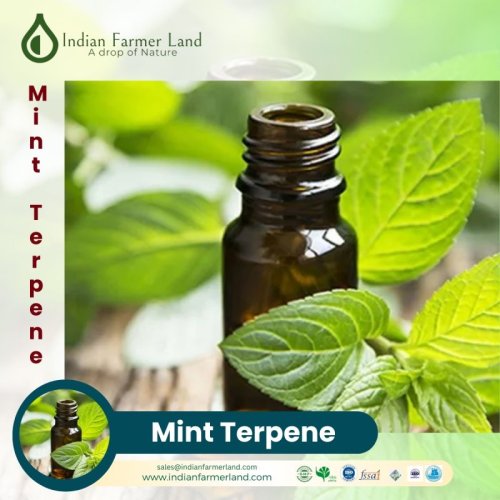
| Business Type | Manufacturer, Exporter, Supplier |
| Packaging Type | Bottles |
| Country of Origin | India |
| Number Of Flower | Herb Oil |
| Usage | Flavorings, Breath Fresheners, Drinks, Mouth Rinses, Toothpaste, Chewing Gum, Desserts, Candies |
| Aroma | Mint Essential Oil, Menthol |
| Flavors | Menthol, Pulegone, L-carvone |
entha (also known as mint, from Greek míntha,[2] Linear B mi-ta)[3] is a genus of plants in the family Lamiaceae (mint family).[4] Thespecies are not clearly distinct, and estimates of their number vary from 13 to 18.[5] Hybridization between some of the species occursnaturally. Many other hybrids, as well as numerous cultivars, are known.
The genus has a subcosmopolitan distribution across Europe, Africa, Asia, Australia, and North America.[6]
Mints are aromatic, almost exclusively perennial, rarely annual, herbs. They have wide-spreading underground and overground stolons[7]and erect, square,[8] branched stems. The leaves are arranged in opposite pairs, from oblong to lanceolate, often downy, and with aserrated margin. Leaf colors range from dark green and gray-green to purple, blue, and sometimes pale yellow.[6] The flowers are white to purple and produced in false whorls called verticillasters. The corolla is two-lipped with four subequal lobes, the upper lobe usually the largest. The fruit is a nutlet, containing one to four seeds.
While the species that make up the Mentha genus are widely distributed and can be found in many environments, most grow best in wet environments and moist soils. Mints will grow 10–120 cm tall and can spread over an indeterminate area. Due to their tendency to spread unchecked, some mints are considered invasive.[9]
Mint essential oil and menthol are extensively used as flavorings in breath fresheners, drinks, antiseptic mouth rinses, toothpaste, chewing gum,desserts, and candies, such as mint (candy) and mint chocolate. The substances that give the mints their characteristic aromas and flavors are menthol (the main aroma of peppermint and Japanese peppermint) and pulegone (in pennyroyal and Corsican mint). The compound primarily responsible for the aroma and flavor of spearmint is L–carvone.
Mints are used as food plants by the larvae of some Lepidoptera species, including buff ermine moths.
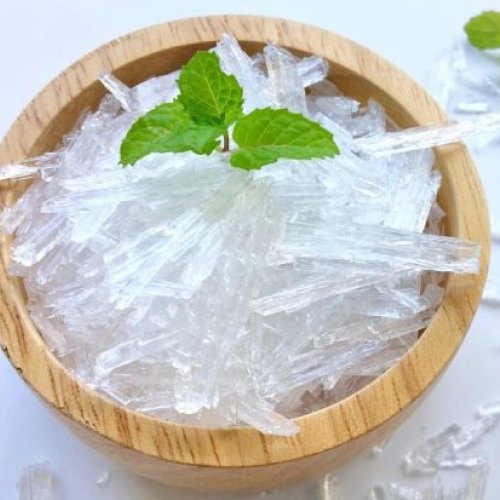
| Business Type | Manufacturer, Exporter, Supplier |
| Country of Origin | India |
| Aroma | Strong Minty Aroma |
| Type | Crystal |
| Color | Clear Or White |
| Packaging Type | Typically Comes In Sealed Containers Or Bags |
| Application | Food, Used In Pharmaceutical,Oral Care,Cosmetic,And Perfumery Products For Various Purposes Such As Analgesic,Cooling,And Refreshing Properties. |
| Material | Menthol |
| Safety | May Cause Difficulty In Breathing, Swallowing, Chest Hardness, And Allergies If Not Used Properly. Avoid Undiluted Use On Skin. |
Description-
Menthol crystal is solid crystalline substance; it is obtained from Mentha arvensis herb plant. Menthol crystal is originated in Japan and mostly grown in China, Brazil and Northern India. It is used as ingredient in various products for medicinal and cosmetic purpose.
Extraction-
Menthol crystal is extracted from Menthe arvensis plant by steam distillation to obtain mint oils then oil is filtered, menthol crystal extracted by cold extraction or chilling the mint oil at different temperature, so menthol crystal is separated out.
Property-
Menthol crystal is clear or white crystalline in colour, it has slightly pungent in taste, very strong & pleasant minty in odor and possessed cooling effect. Menthol crystal is highly concentrated so it is used in small quantity as ingredient. It is soluble in alcohol, ethers and oil.
Composition-
It is composed of L-Menthol, 5-Methylethyl cyclohexanol.
Uses-
- It is used in pharmaceutical purpose for various products such as cough syrups, Analgesic balms; Vicks vapor Rub, Inhalers, drugs, medicated oils, cooling gels, oral or throat sprays, medicated creams.
- It is used in oral products such as Toothpaste, Mouthwashes and oral sprays because of its refreshing action.
- It is used in Chewing gums, hard candies, aerated drinks and liquors.
- It is also used in various cosmetic & perfumery product for their analgesic and cooling & refreshing property. Recommended Usage –
- Lotions
- Shaving creams as it reduces skin burn.
- Refreshing towels
- Deodorants
- Scents
- Salves
- Foot sprays
- Refreshing towels
- Cooling gels
- Lip Balm
- Soaps; it enhance soap action & reduce skin irritation
- It provides relief in chest congestion due to its cooling & soothing sensation in inflamed area.
- It is used to reduce itching by mixing it with carrier oil or aloe Vera gel.
- It also used in cream as it calms sunburn.
- It provides relief in stress, anxiety and nervousness so it is used in aromatherapy.
- It is helpful in sinus problems because it help in alleviate blockages.
- It used in fever as it reduces fever when applying it on head or feet.
- It provides relief of sprains in muscles due to its antispasmodic property, it reduce cramping and muscle spasms.
- It is used in alleviate nausea which is caused by motion sickness as it stimulates digestion because it has carminative property.
Safety and Precaution-
Despite of its benefit on nasal area, it might cause difficulty in breathing, swallowing, chest hardness, and discomfort at site of application.
It may cause serious allergies such as skin allergy, itching, soreness and discomfort at the site of application area.
Avoid undiluted menthol crystal use on skin.
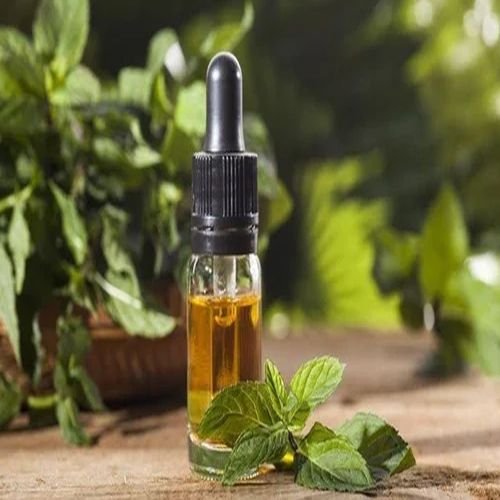
| Business Type | Manufacturer, Exporter, Supplier |
| Application | Aromatherapy |
| Packaging Type | Glass Bottle |
| Color | Clear |
| Type | Essential Oil |
| Country of Origin | India |
| Form | Liquid |
| Material | Menthol |
| Scent | Minty |
| Storage condition | in cool and dry storage area. |
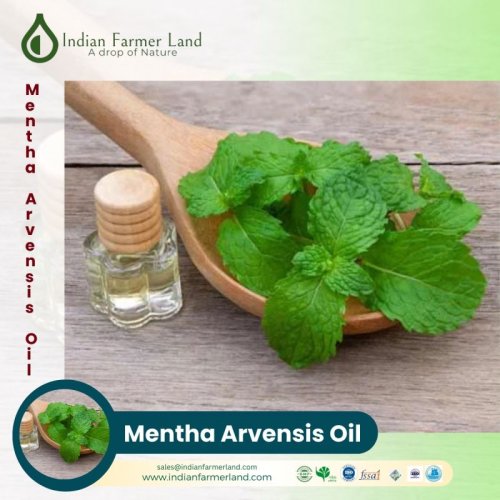
| Business Type | Manufacturer, Exporter, Trader |
| Country of Origin | India |
| Color | Pale Yellowish |
| Shelf Life | 6months |
| Purity | 99% |
| Form | Liquid |
| Also Known As | Corn Mint Oil / Peppermint Oil |
| Botanical Name | Mentha Arvensis |
| Origin | Temperate Regions Of Europe, Western And Central Asia |
| Extraction Method | Steam Distillation From The Flowering Tops Of The Plant |
| Odor | Refreshing, Strong, And Minty |
| Sensation | Cool And Penetrating |
Mentha Arvensis Oil
Mentha arvensis oil is also called peppermint oil or corn mint oil. Mentha arvensis is an herbaceous plant which grows up to 10 to 60cm. It is originated from temperate regions of Europe and Western and Central Asia. Mentha flowers are pale purple or occasionally may be white or pink in colour and 3 to 4 mm long, leaves are simple, hairy and broad. Mentha arvensis oil has various applications such as medicinal, dental and skin care.
Extraction-
Menthe arvensis oil is derived from freshly harvested flowering herb of Menthe arvensis through steam distillation method.
Properties:-
Menthe arvensis oil is refreshing and penetrating in odor. It is pale yellowish in colour with cool sensation.
Blending;
It well blends with rosemary, eucalyptus, lavender, spearmint, benzoin, black pepper, lemon balm (Melissa), marjoram and spice oils.
Composition:-
Its major components are menthol, menthone, isomenthone, menthofuran, carvone, linalool, linayl acetate and piperitenone.
Uses:-
- It is used to reduce acne as it cleanses the infected area.
- It is used to treat bronchitis as it contains menthol so used in inhaling vapors of mint.
- It is active ingredient in burners or balms as it providing cooling sensitization on affected area such as burn and sunburn.
- It is also effective against respiratory problems such as colds, coughs and fever.
- Because of its carminative property, it helps in treatment of digestive issues flatulence, indigestion, diarrhea, nausea, vomiting and colic problem.
- It also effective against headaches, cough sore throat, migraine and vomiting.
- It is used to treat dandruff and massage to scalp for relief from oily scalp.
- It is anti-inflammatory, used to reduce inflammation in muscle joint.
- It is used for the treatment of gout.
- Peppermint oil used to improve blood circulation.
- As mentha oil has anti viral property so it is used for treatment of herpes simplex.
- It is used as ingredient in toothpaste, as it removes bad breath and also helps to alleviate mouth ulcers, tooth aches and swollen gums.
- It is used to relieve stress, effective against nervous system affliction, anger, fatigue, nausea, vertilago, mental strain, mental fogginess and shock.
- It is used for treatment of athlete’s foot disease, poison ivy rashes and diaper rashes.
- It is used to alleviate problem of jet lag, seasickness and motion sickness.
- It is used to control sprout in potatoes.
- It is used to improve dull and oily skin.
- It is used in aromatherapy to alleviate stress and mental strains because of its refreshing effect.
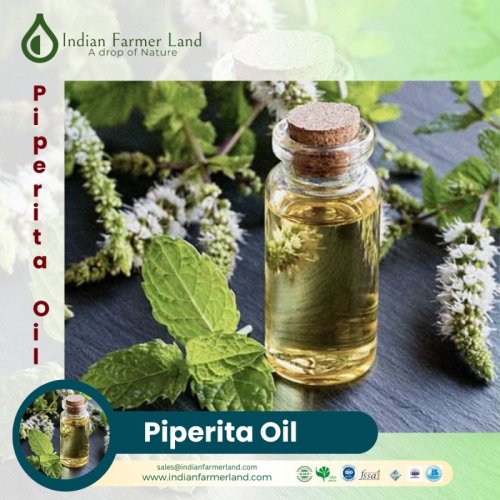
| Business Type | Manufacturer, Exporter, Supplier |
| Country of Origin | India |
| Shelf Life | 12 Months |
| Type | Oil |
| Application | Aromatherapy,Cosmeceuticals,Personal Hygiene,Pharmaceuticals,Bath Preparations,Mouthwashes & Toothpastes,Topical Applications |
| Form | Liquid |
| Color | Colourless To Pale Yellow |
| Material | Mentha Piperita (Peppermint) |
| Extraction Method | Steam Distillation |
| Source | Overground Part Of The Flowering Mentha Piperita Plant |
| Physical Appearance | Colourless To Pale Yellow, Free-flowing Liquid |
| Odour | Fresh, Sharp Menthol With A Pungent Note |
| Sensation | Leaves A Cooling Effect After Application |
Mentha piperita (Peppermint) belongs to Labiateae family and is a perennial herb widely cultivated in the world. It is a popular herb that can be used in numerous forms (ie, oil, leaf, leaf extract, and leaf water). The Organic Mentha Piperita (Peppermint) Oil is obtained by the steam distillation of over ground part of the organically grown flowering plant of Mentha Piperita. Its major components are L-Menthol and Mentha Furon.
The essential oil of organic peppermint is colourless to pale yellow free flowing liquid having Cooling, minty, sweet fresh mentholic, peppermint like taste. Organic Peppermint oil possesses a fresh sharp menthol odour and a pungent taste followed by a cooling sensation. It also has a variety of therapeutic properties and is used in aromatherapy, cosmeceuticals, personal hygiene products, pharmaceutical, bath preparations, mouthwashes, toothpastes, and topical preparations for both its flavouring and fragrance properties.
Blends with: Lavender, rosemary, etc.
Extraction method: The steam distillation method
Constituents: Piperitenone, Pulegone, and 1,8-cineole.
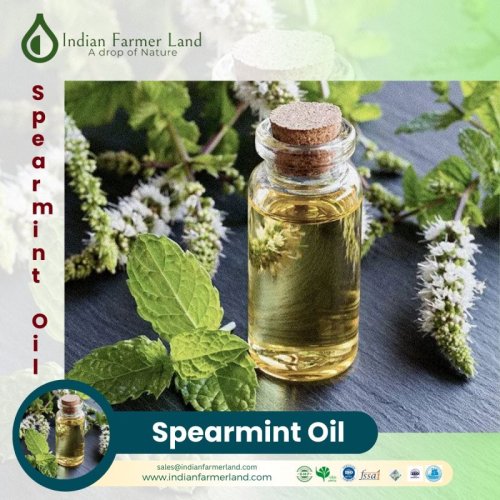
| Business Type | Manufacturer, Exporter, Supplier |
| Country of Origin | India |
| Shelf Life | 12 Months |
| Type | Essential Oil |
| Packaging Type | Well-fitted Container |
| Application | Adds Flavor To Candies,Toothpaste,Chewing Gum,And Baked Foods,Used In Aromatherapy For Various Purposes,Treats Internal Wounds And Intestinal Infections,Provides Cooling And Relaxation For The Brain And Nerves,Aids In Menstrual Problems By Promoting Es |
| Form | Liquid |
| Color | Pale Yellow To Pale Olive |
| Ingredient | Essential Oil |
| Material | Spearmint (Mentha Spicata) |
| Extraction Method | Steam Distillation |
Description-
Spearmint oil is gentle oil comparatively peppermint oil as it contains less amount of menthol. Spearmint oil is isolated from perennial herb Menthe spicata, belongs to Labiatae family. Spearmint plant originated from Mediterranean regions and its growth reaches up to 1meter in height and plant has green lanced shaped , sharply serrated leaves and pink colored flowers.
Extraction-
Spearmint oil is extracted from flowers of Menthe spicata plant by steam distillation.
Composition-
Spearmint oil is composed of α-pinene, β-pinene, cavone, cineole, caryophyllene, linalool, limonene, menthol and myrcene.
Blending-
Spearmint well blends with essential oils such as basil, benzoin, eucalyptus, jasmine, lavender, lemon, orange, peppermint, and rosemary, substituent in wintergreen and peppermint oil.
Properties-
Spearmint oil appears pale yellow or pale olive colour, fresh or slightly fruity scent, softer than peppermint. It is non-toxic, non-irritant and non-sensitizing oil.
Uses-
- Spearmint oil is used to add flavor in cadies and toothpaste.
- It is used in aromatherapy as it helps in fatigue, headaches, migraines, nervousness and ever digestive problems.
- It is used in treatment of internal wound, stomach & intestinal infections.
- It is used in perfumes for fragrance used with herbs like jasmine, lavender, bergamot, sandal wood.
- It is used as food ingredients for baked foods, frozen dairy, meats, beverages and chewing gums.
- It is helpful in digestive discomforts as it has carminative property.
- It is used to stimulate blood circulation.
- It is used to provide cooling and relaxing effect on nerves and brain function because spearmint has cephalic substance.
- It is used to help in muscle spasm due to its menthol content.
- Spearmint oil is helpful in menstrual problems such as irregular periods; obstruct menses and early menses as it induce secretion of estrogen.
- It used to relieves from itching, scabs, decongesting the skin and lesions chance of acne.
- It is used in massage oil as it helps in headaches, migraine and stress fatigue.
- It is used as ingredient of tooth powder, gargles and toothpaste.
- It is used for treatment of sexually transmitted diseases such as gonorrhea and syphilis.
- It is used to whiten teeth and heals mouth sores.
- It is used to add to bath water as it helps in relieve fatigue, fever and muscle pain.
- Spearmint oil acts as antiseptic due to its menthol, myrcene and caryophyllene contents as it can protect wounds, ulcers from infection and help to heal faster.
Safety and Precaution-
- Due to inhalation of spearmint oil, it may cause headaches, skin irritation, nausea, light headedness and even emotional problems.
- Avoid using in excessive amount during pregnancy because it may cause damage to uterus.
- Avoid overdose of spearmint as it might increase kidney damage or liver damage.
Specification of Spearmint Oil
Description – Slightly yellowish coloured fluid liquid, odour pleasant And characteristic, minty taste.
Solubility – Soluble in alcohol.
Acidity – Neutral to litmus.
Relative Density – 0.945
Refractive Index – 1.494
Optical rotation – –56.6°
Assay by GC – 85.7% W/W Carvone contents
Storage – In well fitted container in cool and dark place.
| Business Type | Manufacturer, Exporter, Supplier |
| Application | Aromatherapy,Flavoring Agent |
| Color | Green |
| Part | Leaves |
| Type | Natural Menthol |
| Material | Mentha Arvensis |
| Origin | India |
| Shelf Life | 2 Years |
| Storage | Store In A Cool, Dark Place |
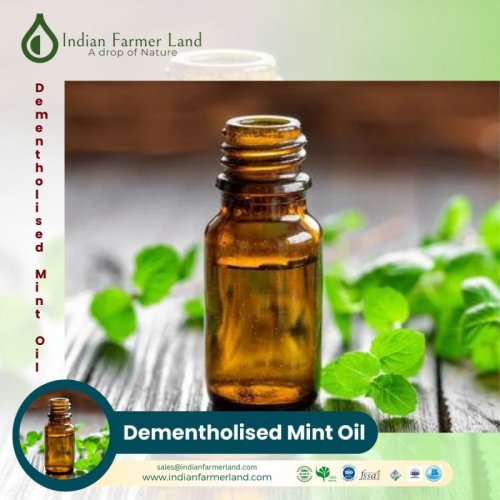
| Business Type | Manufacturer, Exporter, Supplier |
| Application | Flavoring Agent In Chewing Gum,Liquors,And Confectionery; Fragrance Component In Soaps,Cosmetics,And Perfumes |
| Form | Liquid |
| Botanical Source | Mentha Arvensis |
| Origin | India |
| Extraction Process | Deep Freezing At -40°C, Followed By Centrifugation. |
| Appearance | Colorless To Pale Yellow Or Greenish-yellow Liquid |
| Odor & Taste | Pleasant, Minty, With A Cold Taste Sensation |
| Solubility | Miscible With Alcohol |
| Storage Instructions | Store In A Well-fitted, Airtight Container In A Cool, Dry, And Dark Place |
Description-
Dementholised mint oil is obtained from Menthe arvensis, originated in India. It is derived from fresh and flowering part of Menthe arvensis plant. It contains 30% to 56% of I-menthol as its main constituents.
Extraction-
Dementholised mint oil is extracted from menthe arvensis oil followed by processed using deep freezing at -40ﹾC and centrifugation process then menthol is separated from menthe arvensis oil, So remaining part in the form is DMO (Dementholised Mint Oil).
Properties-
It is colorless to pale yellow to greenish yellow liquid and having pleasant & characteristic odor with taste followed by cold sensation as it is minty. DMO is miscible with alcohol.
Composition-
Its constituents are I-methone, α-pinene, I-limonene, Isomenthone, neomenthol, β-pinene, methyl acetate ad pipretone.
Uses-
- It is used as flavoring agents for liquors, chewing gums & others.
- It is used for fragrance in soaps and cosmetics.
- It is also used in perfume.
- It is used in cold-rub and helps in providing a cold soothing experience.
- It is also taken in dietary supplement or topically on skin as a skin cream or ointment.
- It is also helpful in irritable bowel syndrome and indigestion.
Specification of Dementholised Mint Oil:
Description – Colourless clear liquid, Minty taste.
Identification
(A) As per standard
(B) As per standard
Specific Optical Rotation – -16° to -34°
Relative Density – 0.888 to 0.910
Refractive Index – 1.456 to 1.470
Acid Value – 1.0 Max.
Fatty Acid & Resinified – As per standard
Essential Oils
Chromatographic Profile
1.5 % to 7% Limonene Content
1.5% Max. Cineole content
17 to 35% L-Menthone Content
5 to 13% Iso-menthone Content
1.5 to 7% Menthyl Acetate Content
1 to 3% Iso- Pulegol Content
30 to 50% L-Menthol Content
2.50% Max. Pulegone Content
2% Max. Carvone Content
Ratio of Cineol to Limonene – 1 Max.
Storage – In well fitted container in cool and dark place.
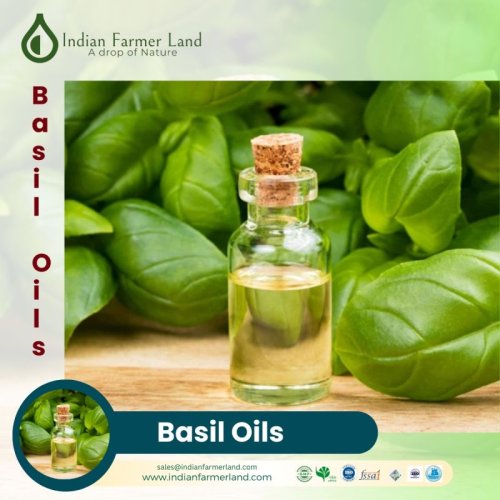
| Business Type | Manufacturer, Exporter, Supplier |
| Country of Origin | India |
| Cultivation Type | Natural |
| Form | Liquid |
| Type | Essential Oil |
| Packaging Type | Well-closed Containers |
| Application | Italian Dishes And Seasoning Blends,Digestive Aid,Respiratory Health,Pain Relief,Mental Wellbeing,Skin & Hair Care,Infections |
| Material | Basil (Ocimum Basilicum) |
| Color | Pale Greenish-yellow |
| Extraction Method | Steam Distillation From Leaves And Flowering Tops |
| Physical Properties | Thin, Watery,Crisp, Sweet, And Herbaceous |
| Key Uses | Used As An Aromatic Ingredient In Italian Dishes And Seasoning Blends,Digestive Aid, Respiratory Health, Pain Relief, Mental Wellbeing, Skin & Hair Care, Infections |
Description-
Basil oil is an annual herb, known as Ocimum basilicum, belongs to Lamiaceae family. It is originated from Tropical Asia and Pacific Islands, commonly cultivated in Europe, Central Asia, India and Southeast Asia. It grows up to 1 meter, its flower from white to pink. Basil essential oil is a source of Vitamin A, Magnesium, Potassium, Iron and Calcium. Basil oil used for various medicinal purposes.
Extraction-
Basil oil is extracted from leaves and flowers of Ocimum basilicum through steam distillation.
Composition-
Its major constituents are linalool, fenchol, eugenol, methyl chavicol (Estragole) and β-caryophyllene and other minor constituents are α-pinene, camphene, β-pinene, myrcene, limonene, cis-ocimene, γ-terpineol, citronella, geraniol and methyl cinnamate.
Properties –
Basil oil is a pale greenish yellow and clear in colour and watery in viscosity. Its aroma is crispy, light.
Blending-
Basil oil is well mixes with bergamot, lemon, juniper, eucalyptus, neroli, lavender, clove bud, geranium, Melissa, lime, hyssop, marjoram and rosemary.
Uses-
- Basil oil is used for culinary purpose as active ingredients for Italian dishes.
- It is used to treat nausea, sickness, indigestion, constipation, diabetes.
- It is ingredient in skin care supplement as it enhances the luster of dull looking skin and also improves the tone of skin.
- It also helps in reduce the symptoms of acne.
- It is used to improve the luster of hairs and also effective against fatigue, flaky scalp.
- It is used in massage oil as basil oil is analgesic, it provide relief from pain, soothes muscle after exercise.
- Basil oil has carminative properties used to treat indigestion, constipation, stomach cramps and flatulence.
- As basil oil have colic quality, also used to alleviate bowel pain.
- It is used to providing relief from cold, influenza and associated fever.
- Basil oil is antispasmodic, used to treat whooping cough.
- It is used to treat asthma, bronchitis, and sinusitis.
- It is used to treat diarrhea and mucous discharges
- Basil oil used to treat various infections such as cuts, wounds, skin infection and bladder infection.
- It is used to reduce mental stress, also improve alertness, used to treat nervous tension, mental fatigue, melancholy, migraines and depression. It provides mental strength and clarity.
- It is used in aromatherapy because of its crisp smelling and refreshing aroma, used to re-energize and soothing effect on muscle.
- It is used to increase metabolic function of body, also improve blood circulation as well.
- It is effective against occasional sleeplessness.
- It is also used against burns, bruises, scars injuries and surgical recovery, sprains and headaches.
- It used to prevent vomiting, nausea, sickness.
Safety and Precaution-
Do not use in excessive amount as it may be carcinogenic due to its methyl clavicol content.
Avoid use of basil oil while pregnant or breast feeding.
Keep basil oil away from reach of children.
It can cause low blood sugar in some people.
Do not use people who are suffering from bleeding disorder.
Specification of Basil Oil:
Botanical Source – Ocimum basillicum
Description – Pale yellow colour clear liquid, characteristics odour. Pleasant smell.
Acidity – Complies
Solubility – Soluble in ethanol (70%)
Physio –Chemical Properties:-
Optical Rotation – 8° – -1°
Wt. /ml (gms/lit.) – 0.930 – 0.946
Refractive Index – 1.500 – 1.509
Assay by GC – NLT 70% Methyl Chavicol content
Storage Condition – Store in well closed container, in cool and dark storage area.
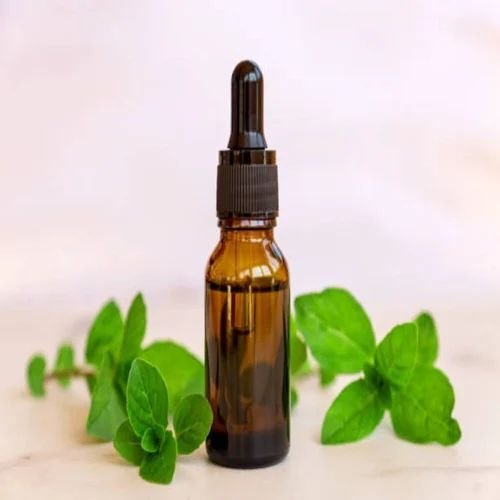
| Business Type | Manufacturer, Exporter, Supplier |
| Material | Mentha Arvensis |
| Color | Colorless To Pale Yellow |
| Packaging Type | Glass Bottle |
| Application | Aromatherapy, Fragrance, Flavoring |
| Consistency | Liquid |
| Scent | Minty, Herbal |
| Size | 10ml |
| Shelf Life | 2 Years |
| Storage | Store In A Cool, Dark Place |
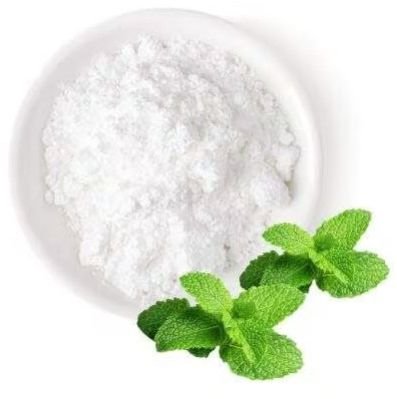
| Business Type | Manufacturer, Exporter, Supplier |
| Type | Menthol Powder |
| Material | Menthol |
| Color | White |
| Packaging Type | Sealed Container |
| Application | Commonly Used In Pharmaceuticals And Cosmetics |
| Scent | Minty |
| Form | Fine Powder |
