info@indianfarmerland.com - GST NO. : 09AZTPS6778B1ZI

Spice Products
Leading Manufacturers, Exporters and Wholesaler of Black Pepper Oil, Cumin Seed Oil, Anise Oil, Celery Seed Oil, Ginger Oil, Nutmeg Oil, Fennel Oil, turmeric oil, Fenugreek Oil, Ajwain Oil, Capsicum Oil, Cardamom Oil, Coriander Oil, Clove Oil and Cinnamon Leaf Oil from Greater Noida.
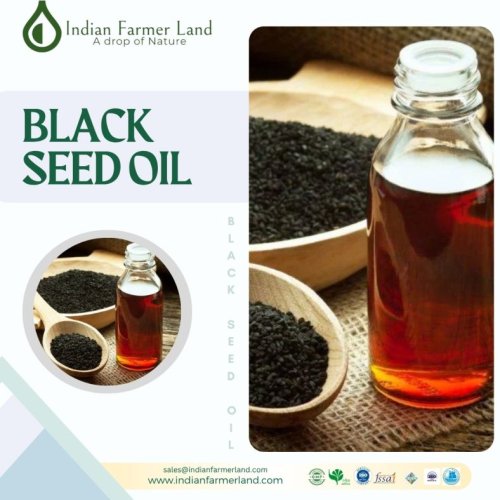
| Business Type | Manufacturer, Exporter, Supplier |
| Country of Origin | India |
| Packaging Type | Glass Bottle |
| Form | Liquid |
| Color | Colourless |
| Type | Essential Oil |
| Material | Piper Nigrum |
| Odour | Strong, Aromatic |
| Solubility | Soluble In Ethanol |
| Optical Rotation | -5° To -23° |
| Refractive Index | 1.4780 - 1.490 |
| Weight Per Ml | 0.880 - 0.940 |
| Alpha Pinene | 1% - 12% |
| Beta Pinene | 3% - 18% |
| Limonene | 4% - 21% |
| Beta Caryophyllene | 7% - 45% |
Description-
Black pepper oil is an essential oil obtained from Piper nigrum plant berries, this plant belongs to Piperceae. Piper nigram mostly cultivated in south west India and largely produced by other country as well such as Indonesia, Malaysia, China etc. Black pepper is dried fruit of the pepper plant which is used to culinary and medicinal purposes. Black pepper is used to spice and seasoning. The spiciness of black pepper is due to its piperin chemical.
Extraction-
Black pepper is extracted from berries of plant Piper nigram by steam distilled method. The dried fruit of black pepper plant is known as Peppercorn.
Properties-
Black pepper aroma is spicy, musky, warm and its fragrance is strong and sharp which stimulates energies.
Blending –
Black pepper is nicely blends with lemon, lime, lavender, sandalwood, mandarin, ylang ylang, Juniper, Bergamot, clary sage, clove, Ginger, gelmium, Coriander, grape fruit, Fennel, Frankincense , citrus , spice, and floral.
Composition-
It components are – limonene, Pinene, myxene, phllandrene, β- bisabolene, sabienen, linalool, pinacarveol, α- termineol, camphene and α- terpenene. Black pepper is rich in minerals and Vitamin- Ca, Mn, Fe, Vitamin-K, β- Carotene, Phosphorus, Potassium, and Selenium.
Uses-
- It is used to enhance flavor of food and many dishes.
- It is used as aperients because it helps in cleansing of intestine and cure infections in digestive and excretory system.
- It is helpful in digestion as it promotes secretion of digestive juices like acids and bile in stomach or facilitates digestion.
- It has antispasmodic property as it provides relief in cramps, muscle pulls, spasms or convulsions.
- It is rich source of antioxidants as it protect body from damage by oxidants i.e. free radicals.,
- It is used in treatment of chronic rheumatisms, arthritis and gout as it is warming so it stimulate and improves circulation and gives relief.
Specification of Black Pepper Oil:
Botanical Source Piper nigrum
Appearance Colourless free flowing clear liquid.
Odour Strong, aromatics and characteristic.
Solubility Soluble in 3 vol. ethanol (95%).
Physio- Chemical Properties:-
STANDARD
Optical Rotation -5° – -23°
Refractive Index 1.4780 – 1.490
Weight per ml 0.880 – 0.940
Chromatographic Profile:
Alpha Pinene – 1% – 12%
Beta Pinene – 3% – 18%
Limonene – 4% – 21%
Beta caryophyllene – 7% – 45%
Germacrene D – 0.1% – 9%
Alpha humelene – max. 5.0%
Total plate count – less than 1000 cells/gram
Yeast and Mould – less than 100 cells/gram
E.coli – Negative/gram
Salmonella – Negative/ 5 grams
Storage – In well fitted container in cool and dark place.
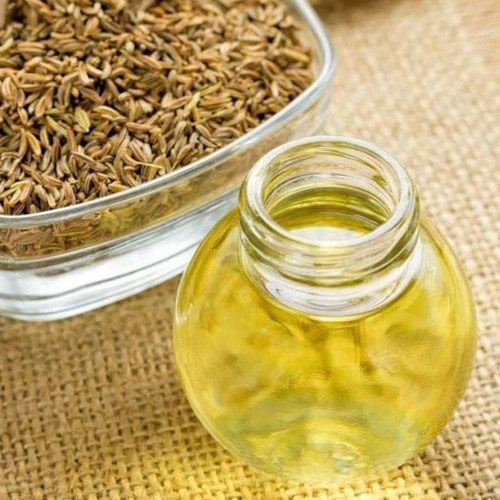
| Business Type | Manufacturer, Exporter, Supplier |
| Form | Liquid |
| Country of Origin | India |
| Type | Essential Oil |
| Material | Cumin Seeds |
| Color | Yellowish |
| Packaging Type | Glass Bottle |
| Application | Aromatherapy, Culinary |
| Scent | Strong, Earthy |
| Consistency | Light, Absorbs Quickly |
| Shelf Life | 1-2 Years |
| Additional Info | Always Do A Patch Test Before Using On Skin. |
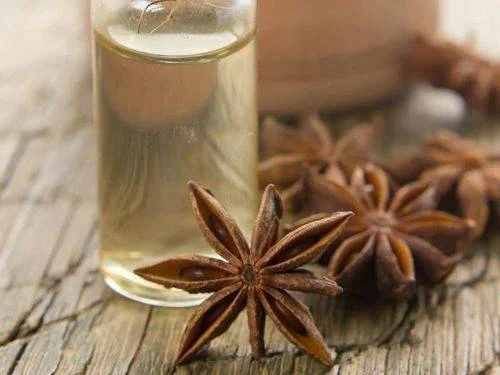
| Business Type | Manufacturer, Exporter, Supplier |
| Color | Clear,Colorless To Pale Yellow |
| Type | Essential Oil |
| Material | Anise (Pimpinella Anisum L.) |
| Extraction Process | Steam Distillation, Supercritical CO₂ Extraction |
| Appearance | Clear, Colorless To Pale Yellow Liquid |
| Consistency | Thin |
| Odor | Pungent, Sweet, Fruity With A Licorice-like Flavor |
| Taste | Sweet And Aromatic |
| Blending Suggestions | Bay,Black Pepper,Ginger,Lavender,Orange,Pine,Rose |
| Storage | Store In A Well-fitted, Airtight Container In A Cool, Dry, And Dark Place, Ideally Not Exceeding 25°C |
Description:
Star anise oil is acquired from Illicium verum which belongs to Illiaciaceae family. It is evergreen tree which reaches up to 30 feet in height and bear flowers and shrubs with simple leaves and small, bisexual flowers composed of numerous petals. Star anise fruit is star shaped, radiating between 5 and 10 pointed sections. Star anise tree was originated from eastern North America to Southeast Asia. Its primary constituent is anethole.
Extraction:
Star anise oil is obtained from fresh and partially dried fruits or seeds through steam distillation method. Oil is present in fruit wall not in the seed.
Properties:
Star anise oil is clear, colourless to pale yellow liquid. It has strong, sweet, sharp and licorice like aroma and thin in consistency.
Blending:
Star anise oil is nicely mixes with bay, cardamom, caraway, coriander, cedar wood, dill, sweet fennel, lavender, mandarin, neroli, orange, petitgrain and rosewood oil.
Composition:
Star anise oil is mainly composed of anethole, foeniculin, methyl chavicol, limonene, linalool, nerolidol, cinnamyl acetate.
Uses:
- Star anise oil is used in aromatherapy as it provides relief from muscular aches & pain and indigestion.
- It can be used as diffuser and inhaler as it eases bronchitis, colds and flu.
- It enhances relaxation, sleep patterns and emotional balance.
- It has antiseptic and antifungal properties; it is used in children shampoos as it repels insects.
- It stimulates and aids concentration, relieves stress related fatigue and increase sexual drive.
- It promotes digestive tract problems including upset stomach, gas, loss of appetite and colic in babies.
- It increases flow of milk in lactating mothers
- It promotes menstruation and eases childbirth.
- It is used to flavor in foods and beverages include chewing gum, baked goods, meat and its meat products, liqueurs and brandies.
- It is effective against respiratory tract infections, lung swelling, cough, bronchitis, the influenza, swine flu and bird flu.
- Star anise oil is used in soaps, cosmetics, perfumes and toothpaste.
- It is used in treatment of post traumatic syndrome.
- It is used as breath freshener and to help settle a nervous tummy.
Safety and Precaution:
- Avoid use of star anise oil while pregnant or breast feeding.
- Keep away from children or infants; it may cause irritability, vomiting and seizures.
- Do not use star anise oil in excessive amount as it can cause skin irritation and possible carcinogen.
Specification of Star Anise Oil:
Oraganoleptic Properties:
Appearance – Fluid liquid
Colour – Almost colouless to light yellow
Odour – Characteristics
Physio-Chemical Properties:
Relative Density – 0.930 to 0.990
Refractive Index – 1.488 to 1.560
Fatty Acid and Resinified – As per standard
Essential Oils
Storage – In well fitted container in cool and dark place.
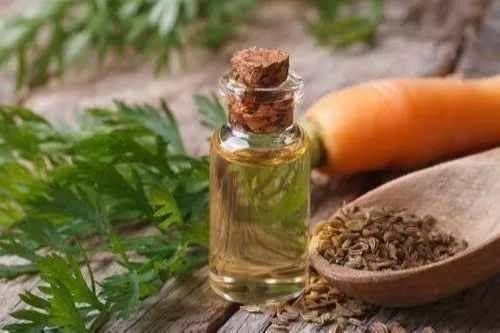
| Business Type | Manufacturer, Exporter, Supplier |
| Shelf Life | 1Year |
| Packaging Type | Glass Bottels |
| Country of Origin | India |
| Application | Used For Hypoglycemic Activity, Hypertension Relief, Diuretic Effect, Aiding Digestion, Preventing Cancer, And Enhancing Dishes. |
| Purity | 99 % |
| Type | Essential Oil |
| Extraction | Extracted By Steam Distillation From Crushed Celery Seeds, Rich In Fatty Acids. |
| Safety And Precaution | Avoid During Pregnancy, Always Use In Half Dilution, Keep Away From Children And Pets, And Do Not Ingest Without Guidance. |
Description:
Celery is an Apium gravelens herb plant which takes two years to fully mature and produce into small fruit are brown in colour. Wild Celery plant growing in salt marshes around the Mediterranean Sea. Essential oil is derived from celery seeds which are used for medicinal purpose, also for flavoring food. Celery has soothing and relaxing effect.
Extraction-
Celery oil is extracted by steam distillation from the whole or crushed seed of Apium gravelens plant. Fruits and seeds are dried or pressed into oil for use as medicine. Fruits are rich in many fatty acids.
Composition-
Celery oil consists of 26 compounds. Its main constituents are limonene, Carvone and 3n –Butylpthalamide. Beta –pthalamide components and beta – selinene are critical components used as herbal medicinal. Trace elements are used in fine perfumes for fragrance.
Blending-
Celery oil is nicely blends with black pepper, coriander, ginger, lavender, lovage, oak moss, opopanax, pine, tea tree.
Property-
Its aroma is sweet, warm and earthy spice. It is pale yellow and very fluid with a strong pungent flavor and smell.
Uses-
- Celery oil has hypoglycemic activity to lower blood sugar.
- It provides relief in hypertension and heart ailments.
- It is also used to remove excessive fluid from body.
- It also digestive effect by prevent or relieve intestinal gas.
- It also used to ease constipation and to expel intestinal worms.
- Celery contains compounds called courmarins that help in prevention of free radicals from damaging cells as well as decrease the mutation which prevent cell to become cancerous and another compound is Acetylene to stop growth of tumor cells.
- Celery has nutritional value; its flavor and crisp texture enhance many dishes
- It is also used to prevent age related degeneration of vision.
- It is also used to treat joint pain so gives relief in rheumatism,
- It promotes relaxation and sleep.
- It has antifungal activity as well as antibacterial; to kill bacteria in urinary tract.
- It is used to treat weight loss due to malnutrition and loss of appetite.
- It also reduces nervousness headaches.
- It is useful for blood purification.
- It is used to control intestinal as because of its carminative property.
Safety and Precaution-
- Avoid it during pregnancy due to uterine stimulation of possible toxicity.
- Use a half dilution of celery oil.
- Keep away from children and pets.
- Never use undiluted essential oilDo not take internally unless working with qualified and expert practioner
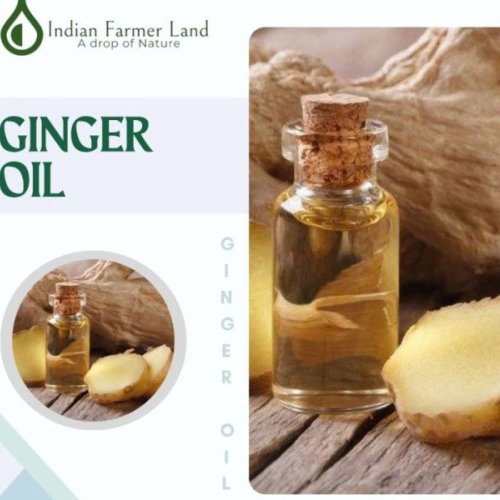
| Business Type | Manufacturer, Exporter, Supplier |
| Application | Aromatherapy, Massage, Skincare |
| Packaging Type | Glass Bottles |
| Color | Pale Yellow |
| Type | Essential Oil |
| Material | Ginger |
| Size | 10ml |
| Scent | Warm And Spicy |
| Attributes | 100% Pure And Natural |
| Benefits | Eases Nausea, Improves Digestion |
| Warnings | For External Use Only, Possible Skin Sensitivity |
Description-
Ginger is a warm, spicy herb belongs to Zingiberaceae family, scientifically known as Zingiber officinale; this plant grows up to 3-4 feet in height with narrow stems, green leaves and yellow flowers. Ginger is originated in India and South China and also cultivation in Asia, West Africa and the Caribbean. Ginger oil is warming and energizing so it has many application in medical and ayuveda.
Extraction-
Ginger oil is extracted from the roots of herb Zingiber officinale through steam distillation method.
Composition-
Ginger oil is composed of various components are as follows- geranial,1-8 cineole, Zingiberene, B- bisabolene, B-sesquiphellandrene, α-pinene, β-pinene, camphene, linalool, bornneol, γ-terpineol, nerol, geraniol and geranyl acetate.
Properties-
Ginger oil has thin consistency. Light yellow in colour and has slightly pungent due to its acrid compound gingerol and spicy in aroma, medium to watery in viscosity.
Blending-
Ginger oil is well blends with many essential oil such as cedar wood, lemon, lime, eucalyptus, frankincense, geranium, rosemary, sandalwood, patchouli, myrtle, rosewood, neroli, orange and ylang ylang.
Uses-
Ginger oil contains Zingibain which is anti inflammatory in nature so it helps in treatment of muscle aches, arthritis, and migraine.
- It is used for treatment for various stomach issues such as colic, indigestion, diarrhea, spasm and stomach aches.
- It is used in aromatherapy as it brings feeling of courageous and self assurance and provides relief from depression, mental stress, dizziness, restlessness, exhaustion and anxiety.
- It is analgesic in nature as it provides relieve from pain due to its Zingibain component, it reduce prostaglandin, it helps in treatment of muscle aches, headache, arthritis, rheumatism and migraine.
- It has carminative effect; it is used to treat food poisoning, motion sickness and vomiting.
- It is anti bacterial in nature so it helps in intestinal infections and bacterial dysentery.
- It is also effective against yellow fever and malaria.
- It is used to provide relief from menstrual illness such as irregular, menstrual cramps and painful menstrual discharges.
- It is also helpful in respiratory issues such as coughs, flu, asthma, breathlessness and bronchitis as it helps in removing mucus from throat & lungs.
- It is a heart ailment as it strengthen heart health, it reduces cholesterol level and prevent blood clotting lead to reduce risk of heart attack and stroke.
- It is aphrodisiac in nature as it eliminates impotency and it halts premature ejaculation.
- It is used to treat kidney stone issue as it dissolves stones in kidney.
- It is used for hair care as it helps in controlling dandruff.
- It is used to treat cancer as it
- It is used to add in meals such as meat as a preservative and flavoring agent.
Safety and Precautions-
Excessive use of ginger oil can cause skin sensitization.
Its high concentration also leads to photosensitivity.
As ginger oil is strong so it should be used carefully and sparingly.
Specification of Ginger Oil:
Appearance – Free flowing liquid
Colour – Pale yellow
Odour – Odour is fresh and woody, characteristic odour of fresh ginger, warm, Spicy the sweet and heavy under note is Tenacious, Sweet & rich almost Balsamic floral.
Physio Chemical Properties:-
STANDARD
Specific Gravity (at 20° C) – 0.870 – 0.882
Refractive Index (At 20°C) – 1.488 – 1.495
Optical Rotation (At 20°C) – -47° – -28°
Zingiberenes (By GC) – (UP to 70%)
Solubility – Soluble in Alcohol and oils, practically insoluble in water.
Storage – Store in well closed containers, in cool and dark storage area.
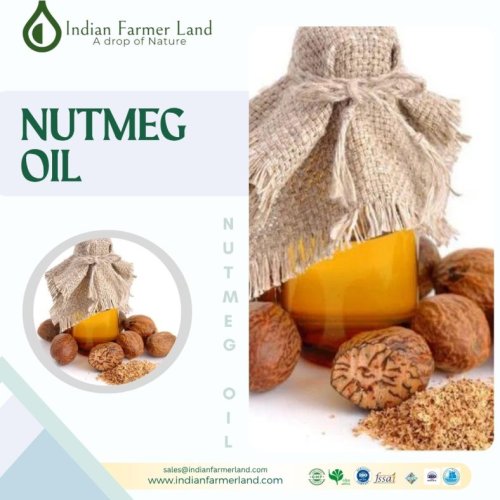
| Business Type | Manufacturer, Exporter, Supplier |
| Type | Spice Oil |
| Appearance | Colourless Or Pale Yellow Liquid |
| Form | Liquid |
| Country of Origin | India |
| Odour | Spicy |
| Relative Density | 0.885 - 0.905 |
| Refractive Index | 1.475 - 1.485 |
| Optical Rotation | +8° - +18° |
| Storage | In Cool And Dark Place |
| Alpha Pinene Content | 15% - 28% |
| Beta Pinene Content | 13% - 18% |
| Sabinene Content | 14% - 29% |
| Car-3-ene Content | 0.5% - 2% |
| Limonene Content | 2% - 7% |
| Gamma Terpinene Content | 2% - 6% |
| Ter-4-ol Content | 2% - 6% |
| Safrole Content | Max. 2.5% |
| Myristicine Content | 5% - 12% |
Description:
Nutmeg oil is derived from evergreen tree jatiphala, scientifically known as Myristic fragrans (or also known as M. officinalis, belongs to Myristicaceae family. Nutmeg tree grows up to 70 feet in height and it has dense foliage and small dull yellow flowers. Its native regions are Molusca islands, also commonly cultivated in Sri Lanka, Java and Penang.
Extraction:
Nutmeg oil is acquired from dried seeds kernels of nutmeg tree fruit through steam distillation method.
Composition:
Nutmeg oil is composed of alpha-pinene, camphene, beta-pinene, sabinene, myrcene, alpha-phellandrene, alpha-terpinene, limonene, 1,8 cineole, gamma-terpinene, linalool, terpinen-4-ol, safrole, methyl eugenol and myristicin.
Properties:
Nutmeg oil is clear and thin in consistency, its aroma is strong, spicy, rich and sweet.
Blending:
Nutmeg is nicely blends with black pepper, cypress, geranium, clary sage, rosemary, ginger, ylang ylang and orange.
Uses:
- Nutmeg oil alleviates pain in muscles, joint pain as it is anti-inflammatory so that it is effective against arthritis, rheumatism and lumbago.
- It is used for the treatment of menstrual irregularities and menstrual cramps and reduces depression and hormone imbalance.
- It promotes digestion and provide relief from stomach aches and alleviate flatulence, vomiting and diarrhea.
- It acts as stimulant, it increases blood circulation.
- Nutmeg oil provides relieve from respiratory issues such as cough, syrups and cold rubs, congestion.
- It is used as brain tonic, it provides relaxes in mental exhaustion and stress, it increases concentration and efficiency at study and work.
- It provides relieve in heart issues as it stimulates cardiovascular system and act as heart tonic.
- It helps in treatment of liver diseases and removes toxins from the liver.
- It also improves kidney health and helps in dissolving kidney stones and accumulation of uric acid in body parts. Also treats gout and joint inflammation.
- It removes bad breath, also effective in toothaches and aching gums so it is added to toothpastes and mouthwashes.
- It is used to flavor in baked goods, sauces, ice creams and custards and in certain coffee drinks includes cappuccino.
- It is used as ingredient in antiseptic soaps, used in bathing due to its refreshing nature.
- It is used in cosmetics for dull, oily or wrinkled skin, so used as ingredient in lotions and creams.
- It is also used as room freshener because of its woody and pleasant aroma.
- It is also added to tobacco to change the flavor of tobacco.
Safety and Precautions:
- Avoid excessive use of nutmeg oil as it can be toxic with symptoms of nausea.
- Do not take nutmeg oil during pregnancy.
Specification of Nutmeg Oil:
Testing Protocol BP
Appearance Colourless or pale yellow liquid.
Odour Spicy
Identification A. TLC Meets the requirement
GC Meets the requirement
Relative Density 0.885 – 0.905
Refractive Index 1.475 – 1.485
Optical Rotation +8° – +18°
Chromatographic Profile:
15% – 28% alpha pinene content
13% – 18% Beta pinene content
14% – 29% Sabnine content
0.5% – 2% Car-3-ene content
2% – 7% Limonene content
2% – 6% gamma terpinene
2% – 6% ter-4-ol
Max. 2.5% Safrole content
5% – 12% Myristicine content
Storage
In well fitted container in cool and dark place.
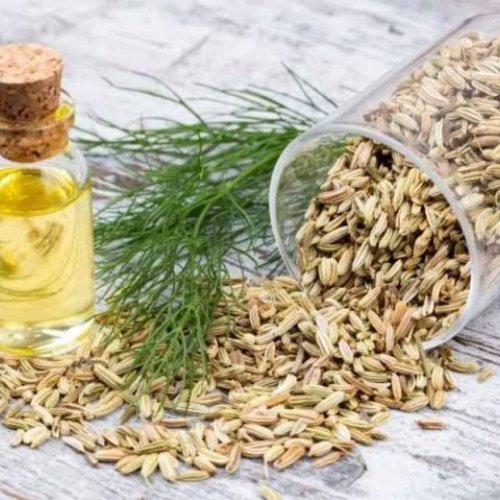
| Business Type | Manufacturer, Exporter, Supplier |
| Type | Essential Oil |
| Material | Fennel |
| Color | Clear To Pale Yellow |
| Form | Liquid |
| Packaging | Glass Bottle |
| Usage | Aromatherapy, Massage, Skincare |
| Scent | Sweet, Licorice-like Aroma |
| Benefits | May Help With Digestion And Relaxation |
Description:Fennel sweet oil is acquired from Foeniculum vulgare i.e. biennial or perennial herb belongs to Apiaceae family. Fennel plant is indigenous to Italy, Greece and France and widely cultivated across the world. Fennel herb growth reaches up to 2 meters high and has fine, green, feathery leaves and golden yellow flowers.
Extraction:
Fennel oil is extracted from steam distilled from crushed fruit (dried seeds) of Foeniculum vulgare herbs.
Composition:
Sweet fennel oil is composed of anethole, fenchone, eastragole, alpha pinene and Beta pinene, alpha phellandrene, alpha terpineol, myrcene, camphor and para cymol.
Properties:
Sweet fennel oil is sweet, earthy licorice like aroma and it is clear with a faint yellow tinge. It is clear in viscosity.
Blending:
Fennel oil is nicely blends with bergamot, spearmint, lime, cypress, dill, cardamom, ginger, grapefruit, juniper, lavender, lemon, mandarin, marjoram, niaouli, orange, pine, rose, rosemary, ylang ylang, black pepper and geranium oil.
Uses:
- Fennel oil is ingredients in various products such as cosmetics, massage oils, toothpastes and soaps.
- It helps in digestion as it has carminative quality, eases indigestion and stomach pain.
- It is diuretic & depurative in nature; it removes excess water, sodium, uric acid, bile salts and other toxic elements and removes toxic substances in the blood.
- It protects spleen from various infections.
- It provides relief from dizziness, fatigue and exhaustion.
- It is effective against mucus and phlegm that lead to congestion of nasal tract, pharynx, bronchi and lungs.
- It provide relieves painful dysmenorrheal and helps in preventing irregular or premature menopause in women.
- It increases milk production in lactating mothers.
- It is used to treat insect bites, anorexia, hiccups, rheumatism and spasms.
- It prevents wound infection with tetanus.
- It acts as stimulant for the nervous, digestive and excretory systems as well as exocrine and endocrine glands
Safety and Precaution:
Avoid use of sweet fennel oil for women who are pregnant, have breast or uterine cancers & tumors or have a history of hormone linked carcinoma or endometriosis.
People who are diagnosed with epilepsy, peptic ulcer, hemophilia and other bleeding disorders, or taking diabetes or anticoagulation medication should avoid fennel oil as it can cause serious complications.
Keep away from reach of children under age of five to prevent allergic reactions.
Do not take in excessive amount as it can have narcotic effects like convulsions, hallucinations and mental imbalance and may cause vomiting, seizures and pulmonary edema.
Specification of Fennel Oil:
- Testing Protocol – BP
- Botanical Source – Foeniculum vulgare
- Description – Pale green or pale yellowish liquid
- Congealing Temperature – Not lower than 3
- Odour – The odour is slightly earthy or peppery spicy & clean sweet aromatic
- Specific Gravity – 0.953 – 0.973
- Refractive Index – 1.528 – 1.538
- Angular Rotation – +12 – +24
- Assay by GC (Anethol) – Not less than 80%of Anethol contents
- Heavy Metals – 0.004%
- Solubility – 1 vol. dissolves in 1 vol. of 90% ethanol.
- Storage – Store in well closed containers, in cool and dry storage area.
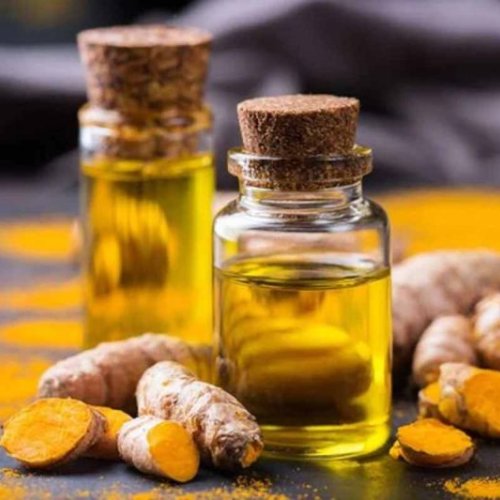
| Business Type | Manufacturer, Exporter, Supplier |
| Color | Bright Yellow |
| Purity | 99% |
| Extraction Method | Steam Distillation |
| Plant Part | Herb |
| Note | Base |
| Family | Zingiberaceae |
| Blends Well With | Tangerine, Ginger |
| Aroma | Earthy, Warm, Spicy |
| Consistency | Thin |
DESCRIPTION
Turmeric oil is extracted from Curcuma longa herb, which belongs to Zingiberaceae. Turmeric plant reaches up to 3 feet in height and its root is bright orange with a thin brownish in colour and has yellow flowers. It is native to Asia. The rhizomes provide the spice.The plant was called Indian saffron during the Middle Ages because of its orange-yellow color. The dye is used to color cosmetics, foods, confectionery, fabrics and paper.
Turmeric offers a warm and calming support for reducing pain. The oil can stain light colored clothing so be sure to dilute it well.
EXTRACTION METHOD: Steam Distillation
PLANT PART: Herb
NOTE: Base
FAMILY: Zingiberaceae
BLENDS WELL WITH: Tangerine, and other citrus; Ginger, and other spices
AROMA: Earthy, warm, and spicy with a curry-like aroma
CONSISTENCY: Thin
COLOR: Bright Yellow
| Business Type | Manufacturer, Exporter, Supplier |
| Certification | Organic |
| Benefits | Soothes Skin,Promotes Hair Growth |
| Size | 10ml |
| Application | Aromatherapy,Skincare |
| Packaging Type | Glass Bottle |
| Type | Essential Oil |
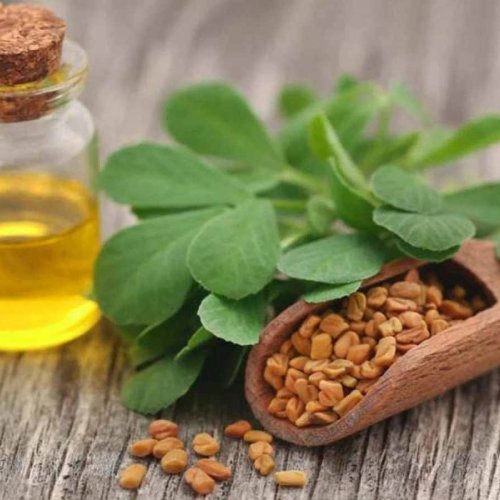
| Material | Fenugreek Seeds |
| Color | Amber |
| Scent | Earthy, Slightly Sweet |
| Shelf Life | 2 Years |
| Storage | Store In A Cool, Dark Place |
Description:
Fenugreek is an annual herb scientifically known as Trigonella foenum belongs to Fabaceae family, native to the Mediterranean regions, Southern Europe and Western Asia. Fenugreek seeds are rhomboid shaped, it has small round leaves that can be dried, as well as seeds. Fenugreek leaves consisting of small, obviate to oblong leaflets, widely produced in Afghanistan, Pakistan, India, Iran, Nepal, Bangladesh, Argentina, Egypt, France, Turkey, Morocco and Spain.
Extraction:
Fenugreek oil is derived from seeds of fenugreek herb through steam distillation.
Properties:
Fenugreek oil is yellowish with a hint of brown colour. Its aroma is fragrant with tones of bitter. Fenugreek seed essential oil contains volatile compounds.
Composition:
Fenugreek oil contains various nutrients are: omega –cardinene, alpha- cadinol, gamma-eudesmol and alpha bisabolol.
Uses:
- Fenugreek oil is used in aromatherapy as it contains volatile compounds which for ushering in several healing actions.
- Fenugreek oil cures acne; it reduces inflammation, swelling, pain and redness around pimples.
- As fenugreek oil has anti oxidant qualities, prevent pimples from oxidizing and also blackheads formation by preventing cells from free radical damage.
- Fenugreek oil is used for treatment of boils, carbuncles, cysts, furuncles, in grown hair and folliculitis.
- It prevents cancer as it has anti carcinogenic property.
- Fenugreek oil promotes blood circulation.
- Fenugreek oil provides relief from swelling, caused by hives and itching.
- It is used in massage oil as it soothes skin so provides relieving from inflammation.
- It is used to remove phlegm from throat, provide relief from coughs and bronchitis.
- It has hypoglycemic activity, used in treatment of Diabetes as it lowers down the blood sugar and cholesterol levels.
- It mimics estrogen hormone in female as it contain diosgenin which used to make synthetic estrogen.
- It increases the milk production in lactating mothers.
- It protects the nervous system, exerts relaxing influence on nervous system.
- Fenugreek oil well known for enhancing feminine beauty as helps to enlarge breast.
- It aids in sexual stimulation.
- It contains choline, aids thinking process.
- It is used to balance hormonal levels aids in treating PMS and menupause.
- It stimulates beta cells of pancreas.
- It is used in aromatherapy as it reduces high blood pressure, encourages sweatening and also treats fever.
- It is used for kidney ailment as it helps in restoring normal health kidney and exerts protective influence on kidney and pancreas.
- It is used for treatment of various problems such as Fevers, sore throats, wounds, swollen glands, skin irritations, ulcers, muscle aches and gout pain
Safety and Precaution:
Use carefully, Fenugreek oil can affect blood sugar levels in people with diabetes as it is hypoglycemic.
Avoid using fenugreek oil as it can cause early contraction and also may cause unusual body odor.
| Business Type | Manufacturer, Exporter, Supplier |
| Application | Ingredient In Toothpaste And Mouthwashes For Bad Breath, Relief From Earaches With Eardrops, Aromatherapy And Massage Oils For Muscle Spasms Relief, Treatment Of Cholera And Diarrhea, Respiratory Issues Relief By Relaxing Air Passages, Painful Throat Reli |
| Purity | 99% |
| Form | Liquid |
| Shelf Life | 1 Year |
| Extraction | Crushed-dried Seeds |
| Properties | Pale Yellowish Brown,Burning,Thyme-like |
| Composition | Thymol,γ-Terpinene,p-Cymene,β-Pinene,Carvacrol,Dipentene |
Description-
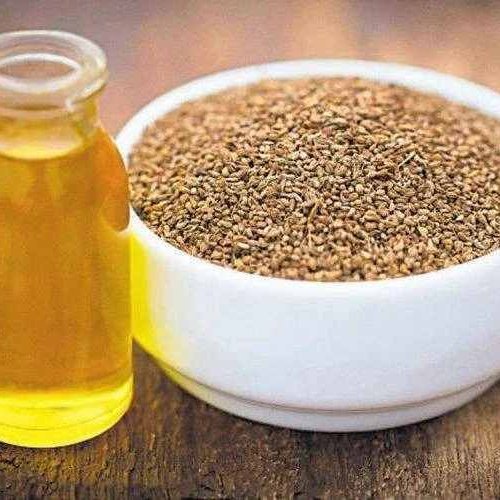
Ajowan is derived from the herb i.e. Trachyspermum ammi, also known as Caram copticum belongs to Apiaceae family. It is originated from Egypt and also spread throughout South West Asia such as in India, Pakistan, Iran, Iraq and Afghanistan. It grows up to 2 feet, a predominately winter crop and harvested in month of April. Ajowain is annual shrub with small, erect with soft hairs and its fruits are grayish in color with oval in shape. Ajowain oil is used in preparation of medicines.
Extraction-
Ajowain oil is obtained from crushed- dried seeds of Trachyspermum ammi shrub.
Properties-
Ajowain oil is pale yellowish brown in colour, burning taste with characteristic thyme odor.
Composition-
It is composed of thymol, γ-terpinene, p-cymene, β-pinene, carvacrol and dipentene.
Uses-
- It is used as ingredient in toothpaste and mouthwashes as it prevent bad breath and its thymol content is an effective mouthwash.
- It is used in eardrops for earaches.
- It is used for aromatherapy, in massage body oil and providing relief from muscle spasm, cramps and arthritis.
- It is used for treatment of cholera and diarrhea.
- It is useful in breathing issues as it relax air passage and allows more oxygen into lungs so help in treatment of bronchial pneumonia and other respiratory ailments.
- It provides aid in healing painful throat.
- It provides ease in stuffy nose, sinus congestion, cold and coughs.
- It helps in kidney stone as it dissolves stone and treats urinary infections to relieve pain and other discomfort of kidney.
- It is used to alleviate rheumatic pain and inflammatory condition.
- Ajowain oil is used in wound cleaning and treating skin infection because of its antiseptic property
| Business Type | Manufacturer, Exporter, Supplier |
| Country of Origin | India |
| Type | Spice Oil |
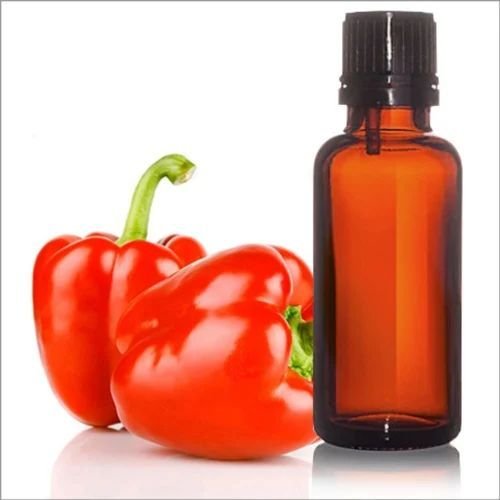
| Material | Capsicum Annuum (Capsicum) Fruit Extract |
| Color | Pale Yellow To Orange |
| Packaging Type | Glass Bottle With A Dropper |
| Usage/Application | Aromatherapy, Massage, Skincare |
| Size | 15ml |
| Benefits | May Help With Pain Relief, Circulation, And Skincare |
| Form | Liquid |
| Business Type | Manufacturer, Exporter, Supplier |
| Country of Origin | India |
| Type | Essential Oil |
| Form | Liquid |
| Botanical Source | Elettaria Cardamomum |
| Appearance | Clear Colourless To Pale Yellow Liquid |
| Odour | Characteristic Spicy And Anise Like Odour |
| Identification | Meets The Requirement |
| Relative Density | 0.917 - 0.940 |
| Refractive Index | 1.461 - 1.467 |
| Optical Rotation | +20° - +40° |
| Acid Value | Not More Than 1.0 |
| Storage | In Well-fitted Container Protected From Light And Moisture |
Description:
Cardamom oil is acquired from seeds of cardamom, scientifically known as Elettaria cardamomum. Cardamom is a perennial herb, member of Zingiberaceae family and it grows in India, also known as green or true cardamom. It has large green leaves & seeds and white flowers. Cardamom oil is a vital component, it has many health benefits.
Extraction:
Cardamom oil is extracted from seeds of Elettaria cardamomum through steam distillation. Its seeds are harvested just before ripening for obtaining cardamom oil.
Composition:
Cardamom oil is composed of sabinene, limonene, terpenene, eugenol, cineole, nerol, geriol, linalool, neradiol, heptenone, borneol, alpha terpineol, beta terpineol, terpinyl acetate, alpha pinene, myrcene, cymene, neryl acetate, methyl heptenone, linalyl acetate and heptacosane.
Properties:
Cardamom oil is clear pale yellow in colour and has sweet spicy, rich and woody fragrance and slightly watery viscosity.
Blending:
Cardamom oil is well mixes with rose, cedar wood, bergamot, cinnamon, cloves, orange and caraway.
Uses:
- Cardamom prevents muscular and respiratory spasms; it provides relieve from muscle cramps and pulls, treats asthma and whooping cough.
- It is used as mouth wash; it disinfects oral cavity and eliminates bad breath.
- It is used to added flavor in foods as it prevent food from spoilage due to microbial action.
- It stimulates digestive system; it promote proper functioning of stomach and helps in maintaining proper secretion of juices, acids and bile in stomach.
- Cardamom oil promotes sweating, helps in clear congestion and coughs and provide relieve in common cold & headaches, also prevents diarrhea which caused by extreme cold.
- It is diuretic, promotes urination and helps in lose weight, also reduce blood pressure, remove toxins and clean calcium and urea which is deposits in kidney.
- Cardamom oil stimulates all organs and uplifts spirits by its refreshing aroma and provides relieve from depression or fatigue, encourage secretion of enzymes and hormones, gastric juices, peristaltic motion, circulation and excretion, maintains proper metabolic action throughout body.
- Cardamom oil is aphrodisiac as it helps in preventing sexual weakness, erectile dysfunction, impotence, loss of libido and frigidity.
- It helps in neutralizing effect of tobacco, insect bites.
- It cleanses skin and also acts as skin toner, promotes healthy skin and reduces signs of aging.
- It also promotes healthy hair; treats scalp infections and prevent dandruff.
Safety and Precautions:
Excessive consumption of cardamom oil will manifest as unrest and extra heating up of body and digestive system, which leads to lose bowels and irritation.Do not use during pregnancy or lactating mothers as it can harm to baby.
Specification of Cardamom Oil
Botanical Source – Elettaria Cardamomum
Appearance – A clear colourless to pale yellow liquid.
Odour – Characteristic spicy and anise like odour.
Identification GC – Meets the requirement
Relative Density – 0.917 – 0.940
Refractive Index – 1.461 – 1.467
Optical Rotation – +20° – +40°
Acid Value – NMT 1.0
Storage – In well fitted container protected from light and moisture.
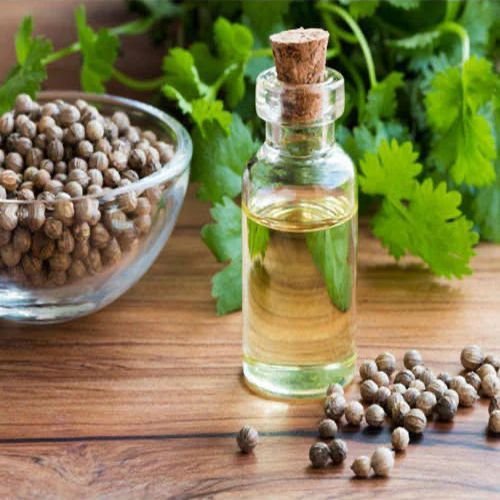
| Business Type | Manufacturer, Exporter, Supplier |
| Form | Liquid |
| Country of Origin | India |
| Type | Spice Oil |
| Material | Coriander Seeds |
| Color | Pale Yellow |
| Packaging Type | Glass Bottle |
| Application | Aromatherapy, Culinary, Skincare |
| Scent | Herbaceous, Spicy |
| Benefits | Antibacterial, Antioxidant, Digestive Aid |
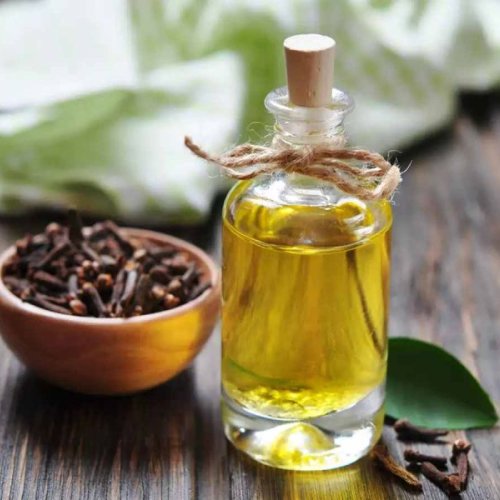
| Business Type | Manufacturer, Exporter, Supplier |
| Usage/Application | Antiseptic,Antibacterial,Antiviral,Antifungal,Wound Healing,Skin Care,Immunity Boosting,Digestive Aid,Flavoring Agent,Aromatherapy,Massage Oils,Soap Ingredient,Perfume Ingredient |
| Extraction Method | Steam Distillation, Supercritical CO₂, Water Distillation |
| Type | Essential Oil |
| Purity | 99 % |
| Country of Origin | India |
| Shelf Life | 12 Months |
| Material | Clove Plant (Syzygium Aromaticum) |
| Color | Colorless To Pale Yellow |
| Aroma | Warm And Spicy |
| Viscosity | Watery |
| Blends Well With | Basil Oil,Rosemary Oil,Cinnamon Oil,Grapefruit Oil,Lemon Oil,Nutmeg Oil,Peppermint Oil,Orange Oil,Lavender Oil,Geranium Essential Oil |
Description-
Clove Oil is an essential oil obtained from clove plant i.e. Syzygium aromaticum, belongs to Myrtaceae family. Clove plant is evergreen tree which grows up to 10 meter and its native place is Indonesia. Clove oil is rich in minerals and vitamins such as Calcium, Potassium, Sodium, Phosphorous, Iron, hydrochloric acid and Vit. A & Vit. C.
Composition-
Clove oil is of three types on the basis of its composition and extraction of oil from part of clove plant–
Bud Oil– Bud oil is extracted from nail shaped rose-peach flower bud; its main constituents are eugenol (60-65%), eugenyl acetate, caryophyllene and other minor constituents.
Leaf Oil– Leaf oil is derived from bright green leaves, its constituents is eugenol (82-85%), no eugenyl acetate and other minor constituents.
Stem Oil– Stem oil is derived from twigs, its major constituents is eugenol (90-95%) ad its other minor constituents.
Extraction–
Clove oil is extracted from buds, leaves and stem of clove plant by steam distillation method, clove oil is extracted from clove buds using supercritical carbon dioxide method and clove oil extracted from leaves of clove by water distillation.
Properties-
Clove oil is strongly warm and powerful aroma, watery viscosity, spicy in smell and colorless to pale yellow in appearance.
Blending-Clove oil blends with essential oils such as basil oil, rosemary oil, cinnamon oil, grapefruit oil, lemon oil, nutmeg oil, peppermint oil, orange oil, lavender oil and geranium essential oil etc.
Uses-
- Clove oil is used as antiseptic, antibacterial, antiviral and antifungal as it helps in treatment of wounds, cuts, scabies, athlete’s foot, bruises, in injuries, fungal infection etc.
- It is used in dentistry such as toothaches, as clove oil contains eugenol which provides relief from dental pain and also used as soothing balm on infants who are teething.
- Clove oil is used to added flavor in several Indian and Chinese dishes such as pickles, sausage, spice, cakes and many other cultural foods due to its spicy and unique flavor.
- It is used in aromatherapy and in massage oil because of its soothing effect provides relief from stress and pain.
- It is used in treatment of acne and also help in lessens the effect of aging like wrinkles, sagging skin and facial rejuvenation of eyes as it increases blood flow.
- It boosts immune system.
- It helps in insomnia as it induces sleep.
- Clove oil also has anti inflammatory property due to its ingredients flavanoids which provides relief from painful swelling and inflammation so it is used in treatment of asthma and rheumatism.
- It is used to clear nasal passage and provides relief from respiratory problems such as cold, cough, bronchitis, asthma, sinusitis and tuberculosis.
- Because of its soothing qualities, it is used in extremely diluted form for baby’s gums as it provides ease in pain and reduces their discomfort as well.
- Clove oil act as aphrodisiac property due to its stimulating effect on mind and also removes mental exhaust & fatigue.
- Clove Oil is used to help to sort out leg ulcers and skin sores.
- It used in treatment of sty i.e. inflammation in eye lashes.
- It is used in treatment of Cholera.
- It is helpful in treatment of diabetes as it helps in control level of blood sugar.
- Due to its soothing aroma, it is used in making of soap and perfume as active ingredients.
- It is used to halts digestive problems like flatulence, diarrhea, nausea and vomiting.
- It stimulates digestion as it helps in relaxing smooth muscle lining in gastrointestinal tract.
Safety and Precautions-
Overconsumption of clove oil may cause nausea, abdominal pain, vomiting and diarrhea.
It may induce allergic effects.
It may lead to shortness of breath, rashes and itching.
Due to its strong nature, it can cause burns inside if used incorrectly.
Repeated use of clove oil can cause skin damage.

| Business Type | Manufacturer, Exporter, Supplier |
| Form | Liquid |
| Purity | 99% |
| Color | Yellow |
| Extraction | Cinnamon Oil Is Obtained Through Steam Distillation Of The Bark And Leaves. |
| Main Constituent | Cinnamic Aldehyde (80-85%) |
| Properties | Spicy Aroma, Highly Concentrated And Very Strong |
| Specific Gravity | 0.980 - 1.090 |
| Refractive Index | 1.560 - 1.590 |
| Optical Rotation | 0°C |
| Solubility | Soluble In 70% Alcohol |
| Storage | Store In Well-fitted Containers In A Cool, Dark Place |
Description-
Cinnamon is an herb belongs to genus Cinnamomum oriented from typical Asia, cultivated in India, Mauritius, Sri Lanka etc. for flavoring and medicinal use. When cinnamon tree become 6 years old then its bark is removed in long strips, after which left them to dry in hot sun, obtained strips roll up into tubes called Culinary spice. It contains essential minerals such as Manganese, Iron and calcium and also have high content of fiber. Cinnamon oil is sweet spice relished all over the world.
Extraction-
Cinnamon oil is extracted by steam distillation of bark and leaves.
Composition-
Its main constituent is cinnamic aldehyde (80-85%) and others are caryophyllene, cymene, eugenol, linalool, methylamine ketone.
Properties-
Cinnamon Oil exudes a spicy aroma, highly concentrated and very strong.
Blending-
Cinnamon oil is well blends with other spice oils such as black pepper, clove, cardamom & ginger as well as bergamot, frankincense, grapefruit, lavender lemon, orange, rosemary, tea tree, thyme and ylang ylang.
Uses- In Cookery-
- It is used in desserts, cakes, pastries and biscuits.
- It is used to flavor the food due to its digestive property and for spicy aroma.
- It is used as ingredient of Carmelite water.
- It is used to flavoring of syrups, creams and aromatic or mulled wines.
- It is also used for hot drinks like cocoa or chocolate.
Industrial application-
- It can be used in mouthwashes as well as in chewing gums to replace bad breath.
- It is involves in perfume making as it have refreshing aroma.
- It is also used as an herbal tea.
As a herbal medicine- Cinnamon oil have antioxidant, anti inflammatory, antidiabetic, antimicrobial, anticancer, lipid lowering, antirheumatic, digestive, antiseptic property.
- It helps in blood purification so used as best treatment for pimples.
- It improves blood circulation due to presence of blood thinning compounds.
- It ensures oxygen supply to body’s cells which leads to higher metabolic activity.
- Cinnamon oil have pain relief property, it helps in removing stiffness of muscle and joint so ive relief in arthritis.
- It boosts the brain activity by removing nervous tension and memory loss so removes headache in cold.
- It controls blood sugar so useful for diabetic patients.
- As it has coagulant property, it helps to stop excess bleeding, effective in healing.
- It can also reduce the risk of colon as it improves the health of colon.
- It is effective in indigestion, nausea, vomiting, upset stomach, diarrhea, and flatulency and also removes acidity.
- It is also helpful in relieving cold, influenza, sore throat and congestion.
- It provides relief in menstrual discomfort and cramping.
- It can be used in natural birth control as it can delays menstruation.
- It is diuretic, help in secretion and discharge of urine.
- It is also useful against Neurological disorders such as Alzheimer disease, Parkinson’s disease.
Safety and Precaution-
Due to high eugenol content of cinnamon oil has potential to corrode metal, so it is stron as it has a burning quality.
If you experience discomfort the use bland oil such as coconut oil, olive oil to dilute cinnamon oil on skin and wipe off excess.
If you do get cinnamon oil into eyes then use a carrier oil to dilute and remove the oil.
Specification of Cinnamon Bark Oil:
- Product Name – Cinnamon Bark Oil
- Appearance – Fluid liquid
- Colour – Yellow colour
- Odour – Typical taste of Cinnamon
- Botanical Source – Cinnamomum Zylanicum
Physico-Chemical Properties:
- Specific Gravity – 0.980 – 1.090
- Refractive Index – 1.560 – 1.590
- Optical Rotation – 0°C
- Solubility – Soluble Alcohol (70%)
- Storage – In well fitted container in cool and dark place.
